Portraits being "important"; Yosuf Karsh

A

Anthony

Guest
Yousuf Karsh said this about photographing famous people; people like Helen Keller, Einstein, Eleanor Roosevelt, Hemingway, and Churchill:

I try to photograph people's spirit and thoughts. . . . If your photograph is the summation of these people's many accomplishments, besides showing their human side, then the historical point of view is fulfilled.

Do we viewers bring an importance to Karsh's photographs of these people because we're peering into their lives? We already attach thought, feeling, and opinion to these people because they're famous, yeah? Would the photograph otherwise carry that importance if we didn't bring our preconceptions?

Elliot Erwit took a famous picture of Jackie Kennedy at her husband's grave site. Here's what Erwitt said about it:

It's important because it's a picture of Jackie Kennedy. Otherwise it's just a lady at a funeral.

Is Karsh's portrait of Hemingway just a picture of a somber man in a sweater? And his picture of Churchill - is that otherwise just a middle aged man scowling at the camera?

Is Karsh's importance psychological (rather than aesthetic, visual)? Because his pictures are concrete records that he gained access to these people and won their trust?

Comments?
 
Separating knowledge of the subject from the photograph is very difficult. If you don't know anything about the subjects then the photographs inevitably lose a lot of their meaning. Equally, knowing what/who the subject matter is can entirely change your perception of the image. There is a classic illustration of the in "Visual Concepts for Photographer" by Stroebel-Hollis, Todd and Zakia on page 143. If you haven't been given the 'visual clue' then the image is superficially just a record of a crowd. Once the clue is given and the image is fully analysed it is no longer as simple as it seemed originally (and cannot be again). It is difficult to separate psychology and aesthetic.
 
Separating knowledge of the subject from the photograph is very difficult. If you don't know anything about the subjects then the photographs inevitably lose a lot of their meaning. Equally, knowing what/who the subject matter is can entirely change your perception of the image. There is a classic illustration of the in "Visual Concepts for Photographer" by Stroebel-Hollis, Todd and Zakia on page 143. If you haven't been given the 'visual clue' then the image is superficially just a record of a crowd. Once the clue is given and the image is fully analysed it is no longer as simple as it seemed originally (and cannot be again). It is difficult to separate psychology and aesthetic.
When you look at a picture of someone you love, you fall in love all over again.
 
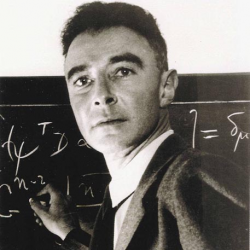
What about this portrait of Robert Oppenheimer?

1612291879583.png

I don't even know who took it. But it's a penetrating, powerful portrait in its own right. We also know that this man led the US atomic bomb project. But we don't need to know who it is to feel the command of this picture.

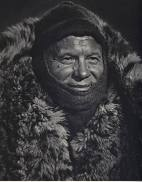
Is Karsh's portrait of Khrushchev just a picture of an older gentleman in a fur coat? . . . if we don't know it's Khrushchev?

1612292295660.png
 
Separating knowledge of the subject from the photograph is very difficult. If you don't know anything about the subjects then the photographs inevitably lose a lot of their meaning. Equally, knowing what/who the subject matter is can entirely change your perception of the image. There is a classic illustration of the in "Visual Concepts for Photographer" by Stroebel-Hollis, Todd and Zakia on page 143. If you haven't been given the 'visual clue' then the image is superficially just a record of a crowd. Once the clue is given and the image is fully analysed it is no longer as simple as it seemed originally (and cannot be again). It is difficult to separate psychology and aesthetic.

My 2 pennies worth ...


Karsh was a genius. But so was Avedon. The difference was that Karsh photographed famous people and - at least in the beginning - Avedon photographed mostly anonymous models. I'd say that Avedon is in no way inferior a portraitist thereby. I don't have to know anything whatsoever about the person, the setting, or even the clothing in an early Avedon to see the value of his portraiture.

For example, this person was/may have been famous in their time (I don't actually know) but they no longer are. Yet, I find this Avedon image compelling without knowing anything about the woman (or the elephants!):

https://hips.hearstapps.com/hmg-pro...8666.jpg?crop=1xw:1xh;center,top&resize=768:*

I also think we Westerners tend to overly bias in favor of the various cults of personality. While knowing something about the subject may indeed make the portrait more richly consumed, it may just as easily cause us to overlook technical and aesthetic flaws in the execution of the portrait. Witness any of the pop culture five minutes famous photographs.

I have absolutely no, none, zilch, nada DNA for making photographs of people, including those closest to and beloved by me. But I can richly enjoy the portrait of a complete stranger, entirely without context when executed superbly.
 
Last edited:
No reason why a portrait can’t have both narrative and aesthetic qualities. Karsh seems to have done both.
I do wonder what people might mean when they say a picture of someone unknown to them that is a “good” portrait. How can they know? It might be a well-crafted picture and aesthetically pleasing but when we use the word portrait, surely we mean more than that. Not just that the photographer has made a workmanlike pack shot, but that something about the subject is revealed to the viewer.
It might not be true, of course. There are pictures of Josef Stalin showing him as a kindly uncle. Kindliness isn’t Uncle Joe’s principal claim to fame.
Portraiture isn’t new. Think of Tutankamun’s wonderful mask. Did he really look like that? Perhaps not quite so serene, but do we now care? Tomb painting show that they knew how to produce a likeness.
What’s depicted and how it’s shown varies through history. There’s the realistic tradition that we’re most familiar with, but if we consider medieval depictions of saints, we see that they were more concerned with narrative than realism and gave priority the saint’s attributes - keys for St Peter, a wheel for St Katherine and so on.
One of the things that surprises me about ULF photographers, is that they can take truly enormous pains to construct a gigantic and impressive apparatus, then use it just to make a picture of their very patient girlfriend, looking very patient. ...and then perhaps some more peole I don’t know, never will, and don’t care about. I may be exhibiting my own limitations here.
 
No reason why a portrait can’t have both narrative and aesthetic qualities. Karsh seems to have done both.
Indeed, but the narrative can alter the perception and impinges on the aesthetic. Karsh's image of Churchill being a prime example. Knowing who it is of and what the sitter represented, then adding in the story of the cigar being taken away and the entire image can change in the viewer's perception. Trying to appreciate its aesthetic qualities can then become a clouded issue.
 
Karsh waited for the right kind of expression to cross Churchill’s face. Is this different from waiting for the sunrise to kiss the distant mountains? Does it matter how he achieved it?
The cigar itself is interesting. Once upon a time, a man depicted with a cigar would have been seen as prosperous and powerful. (Consult any feminist literature for one explanation.)
A pipe would show a family man and a cigarette holder, worldly sophistication. Nowadays, we’d view any kind of smoking quite differently. Photoshop would come to the aid of moral rectitude.
Moral rectitude is another subject, best treated with caution.
 
Does it matter how he achieved it?
No. But how we perceive images is influenced by far more than just the image itself and that is my point. Trying to step back and appreciate the aesthetic of the image can be extremely difficult. Which is one of the reasons that many find it so difficult to be objective about their own work.
 
But - if we didn't know that the subject was Churchill, would we still regard the portrait so highly? What if he were simply a Lloyd's banker glowering at the camera? Does the cigar story - just like Churchill's prominence - add something extraneous to the picture that intrinsically isn't there? Many of you talented folks could probably take a picture of Churchill that would ultimately be regarded just as highly, yeah?

Maybe Karsh's ultimate talent was his ability to simply show up?

Let's surmise that you sneak into 10 Downing St and photograph Boris Johnson as he's stepping out of the shower. Wide-eyed, he stops dead in his tracks. You photograph him. When the picture is shown publicly, no doubt it would achieve some measure of "fame." It might be famous for generations.

If the subject weren't Mr Johnson, wouldn't it be just another funny internet picture of an unknown guy being surprised? - forgotten within weeks? Remember Erwitt said if his picture wasn't of Jackie Kennedy, it'd be just a woman at a funeral.

(I was going to use Trump for this example, but my imagination couldn't bear it . . . )
 
But - if we didn't know that the subject was Churchill, would we still regard the portrait so highly?
That is THE problem. Separating aesthetic from narrative. I'm not sure that I could ever consider the two potential subjects you name in an aesthetic light .....
 
The picture of Oppenheimer. That would be a wonderful portrait if it were just another professor at Oxford or Berkeley. Standing on its own, it's interesting. It just also happens to be the famous physicist.

I agree with you of course. That's why I'm so interested in all of your comments.
 
All interesting and informative stuff.
There are lots of pictures of some bloke in a loincloth nailed to some rough woodwork. What are we to make of them?
A supplementary point here is that the portraitists had never seen the actual Man in a Loincloth so these are almost certainly portraits of somebody else.
 
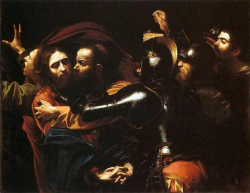
Here's a painting by Caravaggio of the Judas kiss. The chiaroscuro cloaks the picture in unsettling inkyness. It's a disturbing picture. He paints the high values very thick, the low values very thin. His draftsmanship is superb, and too the painting technique: cloth is cloth, flesh is flesh, the hair "feels" like hair, and the soldier's armor is hard and reflective. It feels so rich you can get lost in it.

1612358860754.png

In person this picture is stunning. Some might say that it makes no difference that Jesus is in the picture; that it's a masterpiece regardless.
 
Here's a painting by Caravaggio of the Judas kiss......In person this picture is stunning. Some might say that it makes no difference that Jesus is in the picture; that it's a masterpiece regardless.
Many will not recognise what it represents , so will 'see' it as an image and apreciate it for its aesthetic.
 
Hmmm...
It might be equally possible to interpret this, if we don’t know the story, as one innocent civilian shielding another from arrest by the brutal armoured soldiers . A suggestion only.
I do agree about the virtuosity.

We are teetering on threshold of saying “punctum” and “studium” which might lead us into the kind of debate that we don’t seem to like very much.
 
Entirely OT but speaking of Latin ... The words Capital and Capitol derive from the same latin root, caput. This is not the same as the German kaput. These days, the German would be more correct...
 
As Anthony says, this painting is stunning. It is hard to see how a photographer can get anywhere near this level of intensity and feeling. Caravaggio wasn't tied to "reality", of course. He included only those things that were necessary to create the effect he had in mind, and left out everything he thought would be irrelevant. Photographers, unfortunately, can't do this. In photography, everything that is actually there in front of the lens gets included in the picture.
Rembrandt took what Caravaggio achieved to a new level. His painting The Denial of St. Peter has the most incredible lighting. Peter is telling the Roman soldiers that he doesn't know Christ. A maidservant holds a candle. You don't see it, it is shielded by her right hand and the light seems to be actually glowing through her hand. The same light also illuminates her and Peter and forms the heart of the painting. When I saw this painting in Amsterdam I was totally knocked out by this light. It was as though someone was shining a bright spotlight through from the back of the painting. If you were a photographer trying to create this lighting effect in a studio I have no idea how you would even start. This is because Rembrandt, like Caravaggio, wasn't painting what was there. He was reproducing what was in his imagination. He varied the intensity of the light, and its colour and quality, and placed it exactly where he wanted it. Pure genius.

Alan
 
For candlelight effects in painting, see Joseph Wright of Derby.
 
Compared to Rembrandt, his paintings look rather staged to me.

Alan
 
Back
Top