Very low light photography.

soupdragon

Popular Poster
Registered User
Joined
Oct 17, 2023
Messages
432
I'm struggling to get a starting point for long exposure photography.
I was out on the south coast 2 weeks ago at about 03:30 with just my light meter trying to figure out how to meter for, let's say, a two minute exposure.
Sadly, the light was so low it went below my meters range and therefore I had no starting point. The meter I have is a Minolta Autometer iv F.

So, to the question.
Is there a rule of thumb or some kind of established method of determining exposure when a meter fails?
 
One possible dodge is to meter something white and then adjust a few zones downwards from that.
Don't forget reciprocity.
 
I doubt a 2 minutes exposure would even register, maybe just a vague hint above base fog. You would be in the range of severe reciprocity failure.

it's why the best time for very low light photography is around dawn & dusk.

Ian
 
I doubt a 2 minutes exposure would even register, maybe just a vague hint above base fog. You would be in the range of severe reciprocity failure.

it's why the best time for very low light photography is around dawn & dusk.

Ian
I was reading the Kodak data sheet for E100.
They say that for a 120 second exposure a CC10R filter should be used.
So I'm guessing long exposures affects the magenta dyes more than the others.
They also say add 1/3 of a stop to exposure time.
 
Last edited:
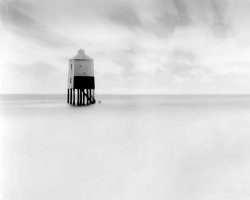
To give you some idea, this just after sunset, Acros 100, metered at 10 minutes, added 5 minutes for reciprocity and because light was dropping so fast I added another 5.

A friend of mine has been known to leave a camera out all night, granted up on Skye where there is next to no ambient light, exposing for 8 hours. Will see if I can find a link.
FB_IMG_1620069658724.jpg
 
I'm struggling to get a starting point for long exposure photography.
I was out on the south coast 2 weeks ago at about 03:30 with just my light meter trying to figure out how to meter for, let's say, a two minute exposure.
Sadly, the light was so low it went below my meters range and therefore I had no starting point. The meter I have is a Minolta Autometer iv F.

So, to the question.
Is there a rule of thumb or some kind of established method of determining exposure when a meter fails?

Martin Henson did a video recently on a nighttime shot and it's fascinating. One hour exposure if I recall.
 
Back
Top