A
Anthony
Guest
I'll post a few of these photographer's comments from time to time. Different people's impressions on this forum will no doubt be fascinating. My remarks are in boldface.
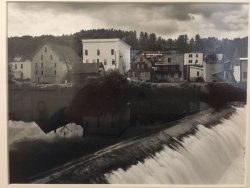
Erwitt: Quality doesn't mean deep blacks and whatever tonal range. . . . The pictures of Robert Frank might strike someone as being sloppy - the tone range and things like that - but they're far superior to the pictures of Ansel Adams with regard to quality, because the quality of Ansel Adams, if I may say so, is essentially the quality of a postcard. But the quality of Robert Frank is a quality that has something to do with what he's doing, what his mind is. It's not balancing out the sky to the sand and so forth. It's got to do with intention.
Good, yeah? The interviewer also asked him about Minor White, viz
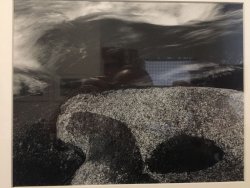
Q - [Minor White] makes it quite clear that he's been influenced by Zen philosophy in his approach to photography.
Erwitt: In what way?
Q - In his theory of equivalence, and the way he sees the photograph as a symbol - one step in a dialogue between the viewer, his spirit, the photograph, and the image.
Erwitt: Oh Jesus Christ. Really? What crap. I tell you, he's a nice fellow, I'm sure, and all that, but that kind of stuff just makes me retch.
Finally this,
[P]hotography is not zone printing or any other nonsense like that. It's just seeing . . . You either see or you don't see. . . . Anyone can learn how to develop, it's how you organize what you see into a picture. . . . if you don't have that ability, learning the rest won't make you a good photographer. Photography, as I see it, is simply a function of noticing things, nothing more.
There you have it. Comments?