Out of focus strip 1 inch from bottom of negs

super_claret

Popular Poster
Registered User
Joined
Apr 12, 2022
Messages
91
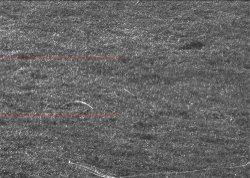
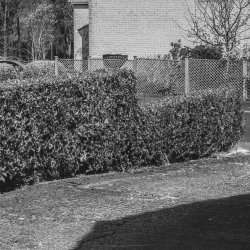
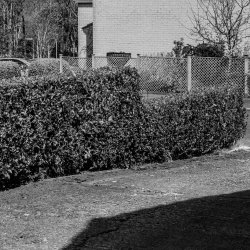
OK, just received my Intrepid 4x5 today and decided to do some test shots in the garden. I used a Cokin filter holder with an orange filter and an ND grad and used a tiny bit of forward tilt. I developed the negs in a Stearman Press tank and scanned on an Epson V750. I’ve noticed an out of focus strip approx 1” from the bottom of the neg and have no idea what could have caused this. The bottom of the neg is sharp. Both images were shot in landscape orientation.

Any ideas what could have caused this?
 
I also took a shot unfiltered and this is perfectly sharp! How strange!
 
I'd be interested to see the scan of the negative if poss.
 
Yes, we'd need to see an image. However, from what you say, it sounds like a problem with the filters.
 
A shot of the front of the camera with the filters in place could be useful
 
As others have said, we need to see the image, but one thought is that if your image is sharp either side of the out of focus area and you are using square resin filters like Cokin or Lee, i wonder if you were looking through the edge of one of your filters?

Unlikely it was the graduated filter as they are rectangular, but the orange would be square.

Mike
 
What make of filters are you using?

I bought the Intrepid 4x5 as a kit with 2 lenses and a set of filters and DDS. The seller's wording in the description was...

Pixel Peeper 84mm Orange Cokin P size, 84mm Yellow Cokin P size, Formatt-HiTech ND soft edge Grad, also Cokin P size. Cokin P164 Circular Polarising Filter. Cokin P Series filter holder & relevant lens adapters x 2. All unmarked. Both lenses have Cokin lens hoods.

The Orange filter is 85x95mm and the Hitech grad is longer.
 
OK. All that follows is personal opinion. Feel free to ignore it.

I have never heard of Pixel Peeper filters and, for the price I have found them, (£6.99) I would say there is a chance that they are not particularly good quality. A Formatt Hitech would cost you around £35 and a Lee double that. What you are finding looks remarkably like a difference in thickness in the filter at one point.

Also, you have only got an 85mm filter system - this could be seriously limiting, in terms of vignetting, when you use a wider lens.

You state that the polarising filter is circular - do you mean it is a square filter that polarises in a circular manner, or that it is circular in shape as well? If it polarises in a circular manner, whatever the shape, it is primarily intended for digital work, not film.

You may need to consider buying a decent 100mm system if you intend to use filters extensively. I have used Formatt Hitech for many years and can thoroughly recommend them, although now they seem to only do ND and polarising. For B&W work, you may need to consider Lee filters, even though they are quite expensive. Others here may have different recommendations for manufacturer - the essential takeaway is - don't buy cheap.

I am curious about the two lens hoods you say you got. With a square filter system, you only usually need one, which fits on the front of the filter holder.

Thanks Joanna, your advice echoes my thoughts. I may have to invest in a decent filter kit. I have always preferred glass filters to resin but never actually been able to see much difference in the finished photographs and the resin filters are obviously less likely to break. Would you advise glass or resin?
 
I agree with Joanna, it must be an issue with one of the filters. I've used Cokin filters since they were first released and never had a problem with them.

Ian
 
Thanks Joanna, your advice echoes my thoughts. I may have to invest in a decent filter kit. I have always preferred glass filters to resin but never actually been able to see much difference in the finished photographs and the resin filters are obviously less likely to break. Would you advise glass or resin?
I have resin because Formatt used to do a full range of B&W as well as ND, etc. They are perfectly fine and have never caused me any problems.

I have just checked Lee Filters site and it would seem a lot of their filters are now available in resin, whereas, when I started in LF, they seemed to only be available in glass. Unfortunately, they are still quite expensive.
 
Joanna is right.
I’ve been scribbling little diagrams, to see if some unusual combination of camera movements can produce the effect. I’ve failed.
There is another possibility; that the film was kinked, but it would be a very remarkable coincidence that this happened in the filtered shot and not in the other.
Nothing wrong with resin filters per se, but they do need to be handled with great care. I’m afraid you are facing some expense.

In passing, a word about lens hoods. They pose a problem in LF, as they can easily intrude into the image area when movements are used. As they are very close to the lens they may be blurred beyond visibility with the lens wide open and only appear on stopping down, when the dark slide is loaded. One easy solution is to use the withdrawn sheath to cast a shadow onto the lens, taking care that it’s out of shot. If the sun is within the shot, no kind of hood will be effective.
There are adjustable bellows hoods but they are expensive and bulky, more suitable for the studio.
 
They pose a problem in LF, as they can easily intrude into the image area when movements are used. As they are very close to the lens they may be blurred beyond visibility with the lens wide open and only appear on stopping down, when the dark slide is loaded
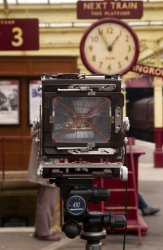
Most good GG screens have the corners cut off…

Keighley Station with Ebony.jpg

This allows you to look through each corner to the aperture and you can clearly see if there is anything intruding in the picture area.
 
”You state that the polarising filter is circular - do you mean it is a square filter that polarises in a circular manner, or that it is circular in shape as well? If it polarises in a circular manner, whatever the shape, it is primarily intended for digital work, not film.”


I’ve been doing some reading about circular v linear polarisers and it would seem that a circular polariser can be used with film and the only disadvantage v linear is that they are more expensive. I’ve been looking at filter kits from Lee, Formatt and Nisi and none of them seem to have a choice of polariser, they come with a circular polariser as standard.

Is there any disadvantage to using a circular polariser with large format or medium format (Bronica SQ)? As I understand it, the reason circular polarisers are used with modern cameras is due to inaccurate TTL meter readings. If I purchase another system, I want to make use of it on my 5x4 and Bronica SQA and I always use a handheld meter.
 
I’ve been doing some reading about circular v linear polarisers and it would seem that a circular polariser can be used with film and the only disadvantage v linear is that they are more expensive. I’ve been looking at filter kits from Lee, Formatt and Nisi and none of them seem to have a choice of polariser, they come with a circular polariser as standard.

I also don't see any problem in using a circularly polarised filter with film - my thought was that a circular filter, as opposed to a square one, is more likely to cause vignetting with wider lenses. Nonetheless, you need to be aware that any filter, edit polarising or ND can contribute to vignetting in the corners as the light has to pass at an angle through the glass.

Is there any disadvantage to using a circular polariser with large format or medium format (Bronica SQ)? As I understand it, the reason circular polarisers are used with modern cameras is due to inaccurate TTL meter readings. If I purchase another system, I want to make use of it on my 5x4 and Bronica SQA and I always use a handheld meter.
Because I use a square filter holder with a suitable adapter permanently attached to each lens, I use the same filters on all my cameras - LF, MF and digital.

I also take any meter readings before putting the filters in front of the lens, thus avoiding any such problems. It is also imperative when it comes to strong ND filters, where an in-camera meter would not read through the filter.

When it comes to choosing a filter holder system, make sure you consider the need to rotate one and not the other - as in the scenario where you need two ND grads at different angles, or to be able to rotate a square polariser whilst using an ND grad.
 
Back
Top