Why Oh Why?

He [Karsh] had access to High Society.

"As a friend, patron, and supporter of Karsh’s early years as a photographer, he [William Lyon Mackenzie King] played an important part in opening the doors of opportunity."

"Through the Prime Minister's patronage, I obtained some of my most important photographs, including a scowling Winston Churchill, in the darkest days of the second world war, which was the turning point of my career."
 
Hmmm…
This seems to say that you are an artist because choose to you say you are. Impossible to quarrel with that.
However, may I ask a supplementary question? How would a third party recognise an artist?
 
Last edited:
Ian, I believe that Playboy magazine used 10x8 transparencies for some time. They were seemingly very keen to remove any tiny residual imperfections from the healthy young women who formed such a prominent part of their offering. Presumably, all is digital now, if it’s still published.
 
Fantastic! Thanks. Can you share one photographic work of yours for each of the above categories? And maybe in a line or two tell why you think it is good/bad and why you like/dislike?
Hmmm…
This seems to say that you are an artist because choose to you say you are. Impossible to quarrel with that.
However, may I ask a supplementary question? How would a third party recognise an artist?

It is irrelevant (to me) whether a 3rd party would recognize it. It might be important to an art critic, a potential collector, or someone otherwise in the arts ecosystem and have have pretty much no interest in any of that. My interest in art is in capturing and interpreting the world around me in a way that makes me "care about the picture".

What usually passes for arts criticism and analysis is - in one way or another - rooted in monetizing the artifact. I long ago lost interest in this.

Art is an existential experience in which the interaction of the artist, the artifact, and the consumer all play roles - roles that are impossible to precisely define. I alone can know my intent and reaction to the resulting work (and maybe I don't even fully understand it or at least cannot articulate it). A 3rd party may well have a reaction which I cannot predict. That same 3rd party cannot know my instinct for making the artifact, at least not fully. So, I've abandoned any attempt to explain my work, purpose, or how I experience the output. (I will, however, always be open to the discussion of the various Eye Of Newt required therein.)

Example: I think it was you that pointed us to the work of Raymond Moore. I took some time to explore this. I found it to be art at some level but tedious, uninteresting, and I actively hated some of the work. Clearly, many others disagree. That's why I make a distinction between the creation of art (what the artist cares about) and it's consumption (what the observer cares about).
 
Last edited:
Fantastic! Thanks. Can you share one photographic work of yours for each of the above categories? And maybe in a line or two tell why you think it is good/bad and why you like/dislike?

Well, I can try, though I doubt I will fully be cable to describe my reactions in prose:

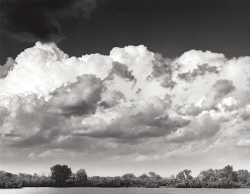
Good art I have made that I like:

1661098992031.png

I have some very minor technical reservations about this image, but I find it deeply satisfying structurally and aesthetically.

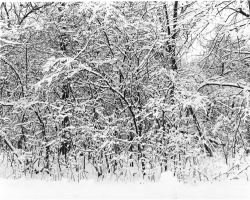
Good art I have made that I don't like:

1661099105126.png

We've beaten this one to death on technical grounds before. It's straight out of the standard canon of American arts photography. It think it is well executed and it very much interprets what was there that day. However, it simply doesn't move me much. I don't "care" about it.

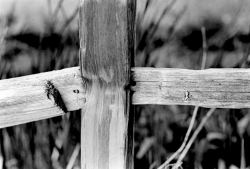
Bad art I have made that I like:

1661099367916.png

This is an image straight out of Art School 101. It's almost entirely an exercise in technical study, interprets nothing, and has no real emotive content. Yet, for reasons I cannot fathom, I really, really care about this one and smile whenever I see it.

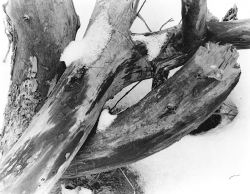
Bad art I have made that I do not like:

1661099576672.png

This image was a well intended effort to find abstraction in nature. The day was dreary and grey and I was working to find beauty in the flat light. What I got instead was a perhaps technically competent image of a pile of logs. I find no cohesion, story telling, or other emotive component to this. It's just a pile of wood.

I have no doubt that others here will have very different reactions to all the above (or not), but again, I do this for myself.

As a perhaps interesting postscript: While I do not seek the approval of others, I do value the criticism of fellow artists (hence my posting of new work here periodically). It is nearly guaranteed that I will get useful technical feedback when I do.

I hope this answers your question because I doubt I can explain things better than this.
 
Ian, I believe that Playboy magazine used 10x8 transparencies for some time. They were seemingly very keen to remove any tiny residual imperfections from the healthy young women who formed such a prominent part of their offering. Presumably, all is digital now, if it’s still published.

They not only used 8x10, they spray painted the subjects with makeup to remove imperfections. It's now come to light, BTW, that Playboy was a wildly abusive and exploitative environment that badly mistreated the young women in their orbit.
 
Well, yes. That’s not quite what I thought I was asking. Let me try to re-phrase it.
You use the words art and artist in a way that suggests that you know what you mean. What tests would you apply to a person in order to call them an artist? If I apply those tests, will I be able to recognise one.
This rules out all those subjective “…lifts the spirit…” statements. In any case, they are descriptions rather than definitions. Something may lift mine and not yours, so the putative artist/Philistine would exist in a kind of Schrodinger‘s condition.
I’m finding all this very interesting.

Ian, yes. I’ve heard, but not followed, suggestions that things were not right.

Much of my answer depends on my personal belief system and anthropological cant. This is decidedly not the place to enter into that particular disquisition. So, I will share only my conclusions in the matter here. (For the rationale' you'll have to wait for my someday-to-maybe-be-published book, current working title, How Theology, Theoretical Mathematics, Quantum Physics, And Goedelian Incompletness Inform Epistemology And Aesthetics. There will - naturally - be a children's story book and possibly companion diet program. Also hoping for massive movie rights ...)

As to my conclusions:

  • Art is the conscious and intentional act of a human being. (Animals do not produce art contrary to popular claims.)
  • All human beings are - in principle - capable of producing art. (Even people with profound intellectual or physical disabilities have been known to produce art, some of it quite good.)
  • The act of making art produces an artifact which can be consumed or observed by the artist or others. (Invisible NFTs are not art.)
  • The artifact may be either transient (a symphonic or other performance) or relatively permanent (a statue).
  • The artist's work, as expressed in the artifact must interpret reality, not just blindly reproduce it. (Strict photojournalism isn't art. A photojournalist using their craft to provide interpretive commentary may be art, though it runs the risk of devolving into propaganda.)
  • However obliquely, art speaks to the human experience. (A picture of a black wall with no other context isn't art. It's a scam. But Duchamp's urinal was art.)
  • The method of producing the artifact must be intentional and guided by the artist. (Pollock's random paint spattering was still at his hand. Computers do not produce art though they may produce beauty.)
  • Art does not depend on whether the artifact is good or not. (Small children produce art. N.B. It is often better than what is found in the postmodern critical schools.)
  • Art and Beauty are different things. One does not imply the other necessarily.
  • The artist's artifact conveys meaning to them. (It may- or may not to others, and it may not convey the same meaning if it does.)
  • That meaning may involve both the artifact and the manner/context of its display. (The example of the black wall above could well become art if displayed in a particular gallery context. In that case the "artist" is the a colloboration of the person(s) making the artifact and those providing the context.)
So, in short: If a human being sets about, with intention, to produce art that can be consumed by themselves or others, it's art and they are an artist. None of this speaks to how good- or bad it might be.

Now, I realize this isn't what is normally peddled as "art" or "artist", particularly in the arts schools and among the "we're all in this together" crowd. I also realize that this isn't something other photographers here- and elsewhere would necessarily accept. But you did ask for my view.

P.S. I will at least admit this much of my personal bias in public: The human spirit has suffered a tragic indignity when the caste system arose that declared a few people as "artists" and everyone else not worthy.
 
Last edited:
So, in short: If a human being sets about, with intention, to produce art that can be consumed by themselves or others, it's art and they are an artist.


If the human being sets about with the intention of producing a blurry picture of a white wall and does indeed make a picture that matches his intention, would that picture be a work of art and would that make the human being an artist? If it's a work of art, is it also a good work of art? What makes a work of art good or bad?
 
Much of my answer depends on my personal belief system and anthropological cant. This is decidedly not the place to enter into that particular disquisition. So, I will share only my conclusions in the matter here. (For the rationale' you'll have to wait for my someday-to-maybe-be-published book, current working title, How Theology, Theoretical Mathematics, Quantum Physics, And Goedelian Incompletness Inform Epistemology And Aesthetics. There will - naturally - be a children's story book and possibly companion diet program. Also hoping for massive movie rights ...)

As to my conclusions:

  • Art is the conscious and intentional act of a human being. (Animals do not produce art contrary to popular claims.)
  • All human beings are - in principle - capable of producing art. (Even people with profound intellectual or physical disabilities have been known to produce art, some of it quite good.)
  • The act of making art produces an artifact which can be consumed or observed by the artist or others. (Invisible NFTs are not art.)
  • The artifact may be either transient (a symphonic or other performance) or relatively permanent (a statue).
  • The artist's work, as expressed in the artifact must interpret reality, not just blindly reproduce it. (Strict photojournalism isn't art. A photojournalist using their craft to provide interpretive commentary may be art, though it runs the risk of devolving into propaganda.)
  • However obliquely, art speaks to the human experience. (A picture of a black wall with no other context isn't art. It's a scam. But Duchamp's urinal was art.)
  • The method of producing the artifact must be intentional and guided by the artist. (Pollock's random paint spattering was still at his hand. Computers do not produce art though they may produce beauty.)
  • Art does not depend on whether the artifact is good or not. (Small children produce art. N.B. It is often better than what is found in the postmodern critical schools.)
  • Art and Beauty are different things. One does not imply the other necessarily.
  • The artist's artifact conveys meaning to them. (It may- or may not to others, and it may not convey the same meaning if it does.)
  • That meaning may involve both the artifact and the manner/context of its display. (The example of the black wall above could well become art if displayed in a particular gallery context. In that case the "artist" is the a colloboration of the person(s) making the artifact and those providing the context.)
So, in short: If a human being sets about, with intention, to produce art that can be consumed by themselves or others, it's art and they are an artist. None of this speaks to how good- or bad it might be.

Now, I realize this isn't what is normally peddled as "art" or "artist", particularly in the arts schools and among the "we're all in this together" crowd. I also realize that this isn't something other photographers here- and elsewhere would necessarily accept. But you did ask for my view.

P.S. I will at least admit this much of my personal bias in public: The human spirit has suffered a tragic indignity when the caste system arose that declared a few people as "artists" and everyone else not worthy.


"You can explain everything about Art except the bit that matters." (George Braque)

Alan
 
Hmmm… Thank you.
Some things to agree with, some things to question. No simple one-liner it seems.
We can straightforwardly identify plumbers, surgeons and roadsweepers. What’s so special about a group called artists? There are obviously hierarchies of skills, but currently, art requires no skill, so that isn’t relevant. That may not be a wholly accurate statement. It’s probably true for the stuff that gets hung on gallery walls, but an unskilled musician or ballet dancer seems an impossibility.
Things may change. Prescriptive statements (perhaps about computers) will almost certainly become invalid. Is a symphony, a photograph or a cathedral non-art because the means of production were electronic?
That there will be other unsupported prescriptions in the future, seems like a sure-fire prediction.
The best that I can do is that art is something made by artists and artists are people who make art. Clearly inadequate, but at least it has brevity.
 
If the human being sets about with the intention of producing a blurry picture of a white wall and does indeed make a picture that matches his intention, would that picture be a work of art and would that make the human being an artist? If it's a work of art, is it also a good work of art? What makes a work of art good or bad?
If that picture self-evidently interpreted the human experience or the manner/context of its display gave it that measure (at least to the artist), yes, then its art.


Whether art is good or bad is a very long discussion for another day. I do not share the view that art's goodness or badness is entirely subjective, it has less to do with what you or I like, and I think there are some objective standards to at least begin to approach this question. But that's a whole other thread of pontification ...
 
Last edited:
Hmmm… Thank you.
Some things to agree with, some things to question. No simple one-liner it seems.
We can straightforwardly identify plumbers, surgeons and roadsweepers. What’s so special about a group called artists? There are

Nothing. What is special is good artists, which are rather rare in the scheme of things.

More to the point, "artists" produce many things which they experience for themselves. While we can observe their output, only they can explain its meaning (and perhaps not always that). By contrast, I am reasonably clear on what the "meaning" of the work of a plumber, surgeon, or roadsweeper.

obviously hierarchies of skills, but currently, art requires no skill, so that isn’t relevant. That may not be a wholly accurate statement. It’s probably true for the stuff that gets hung on gallery walls, but an unskilled musician or ballet dancer seems an impossibility.

I think there is ample evidence of unskilled but very popular musicians in the pop music mainstream. I can name quite
a few off the top of my head.

Things may change. Prescriptive statements (perhaps about computers) will almost certainly become invalid. Is a symphony, a photograph or a cathedral non-art because the means of production were electronic?

It's not the "means of production" that matter. It's whether that means is under the direct control and manipulation of the artist - i.e. Is the artifact a creation of the artist or of the automation. There are certainly gray areas here, but if I write a machine learning system that then becomes an expert at Dali-like drawings, that's not art because the machine is doing the work independent of my direct work on the artifact.

That there will be other unsupported prescriptions in the future, seems like a sure-fire prediction.
The best that I can do is that art is something made by artists and artists are people who make art. Clearly inadequate, but at least it has brevity.
 
Last edited:
I'm not sure that even that stands up.
Shakespeare is no longer available to apply direct control and yet his works are very highly regarded. There is also theproblom of the commissioning body. A Renaissance painter would typically draw up a contract with his patron, defining the work quite closely - so many figures, including so many portraits of the patron's children or other nominees; so much gold leaf or ultramarine; such and such a size to fit such and such a space. The idea that the artist is somehow free to create whatever they choose is a fairly modern one.

As for "good" art, it's possible that there are some sort of absolute standards, somewhere, but we have not yet discovered them. So far, no Newton or Einstein. We do have a good deal of information on how to make a competent work, well beyond The Thirds which so fascinate photographers.

I would ask: "Good for what?" Your requirements and sensibilities are almost certainly different from mine and ours different from others. So, I have a other suggestion. It's not quite the test of time, but it's more or less statistical. If enough reasonably well-informed people like (for want of a better word) something, and they represent a wide spread of thought and practice, then we might say the work is "good." There is also the parallel question of survival.
This is not really satisfactory as a statement of fundamental truth, I fear. But we don't demand absolute, eternal standards in engineering or law-making and they are at least as important to the human condition.

I do entirely concur with your idea that you don't have to like it to perceive or acknowledge its quality.

Incidentally, you have shown us a Broken Cross image in which you see no emotive content. I'm not speaking for myself, but a few pages of exposition could be extracted from it.

Do you think we might have held this particular horse close to the water for long enough?
 
Last edited:
I'm not sure that even that stands up.
Shakespeare is no longer available to apply direct control and yet his works are very highly regarded. There is also theproblom of the commissioning body. A Renaissance painter would typically draw up a contract with his patron, defining the work quite closely - so many figures, including so many portraits of the patron's children or other nominees; so much gold leaf or ultramarine; such and such a size to fit such and such a space. The idea that the artist is somehow free to create whatever they choose is a fairly modern one.
I didn't mean to imply that the artist had to be unfettered to produce the work for it to be art. The only requirement in my mind is that they are in full control of producing the artifact, whatever its limitations or lack thereof.

As to Shakespeare ... he produced a durable piece of art in writing the original play. Subsequent generations produce transient art based on that work when they perform it. That's one of the hallmarks of great art - it can become multiplicative.

As for "good" art, it's possible that there are some sort of absolute standards, somewhere, but we have not yet discovered them. So far, no Newton or Einstein. We do have a good deal of information on how to make a competent work, well beyond The Thirds which so fascinate photographers.

I would ask: "Good for what?" Your requirements and sensibilities are almost certainly different from mine and ours different from others. So, I have a other suggestion. It's not quite the test of time, but it's more or less statistical. If enough reasonably well-informed people like (for want of a better word) something, and they represent a wide spread of thought and practice, then we might say the work is "good." There is also the parallel question of survival.
This is not really satisfactory as a statement of fundamental truth, I fear. But we don't demand absolute, eternal standards in engineering or law-making and they are at least as important to the human condition.

I do entirely concur with your idea that you don't have to like it to perceive or acknowledge its quality.

Incidentally, you have shown us a Broken Cross image in which you see no emotive content. I'm not speaking for myself, but a few pages of exposition could be extracted from it.

Do you think we might have held this particular horse close to the water for long enough?

Probably. Thanks for the interesting chat, all.

P.S. I continue to look for my Pantone swatch for stop bath.
 
Did you get the answers to your questions . . . .

One of my twin niece's eldest daughter is an artist, very talented, but aged 5/6 it's naive art. Raghu asked you fair questions, which you attempted to answer, but it's hard to determine where your own work as a photographer claiming to be an artist exists, it stands between what we can all call naive, and fine art. But all you post image wise is at that lower end, towards naive.

Ian
 
Yes. I think we shall neither wholly agree nor disagree, but we are straying away from photography. Thank you in turn.
 
Back
Top