A Bit More On 510 Pyro And Grain

thronobulax

Very Active Poster
Registered User
Joined
Aug 29, 2020
Messages
1,368
A while back I took a brief look at 510 Pyro and found it to be competent but not a compelling alternative to Pyrocat-HD or D-23.

The one last thing I wanted to try was doing a semi-stand development for 30mins with agitations at the 10/20 min points after a minute of initial agitation at full 1:100 dilution. This is approximately semi-stand model recommended in the developer instructions. My prior forays had been considerably more diluted and longer.

I purposely chose Tri-X in 35mm because this combination punishes developers that do not handle grain gracefully. As it happens, I'd just done some 35mm Tri-X in Pyrocat-HD of similar subjects so I was able to make a reasonable, if not scientific, judgment.

Based on this, I would say that 510 Pyro has noticeably inferior grain behavior than Pyrocat-HD. With this film and format, some grain is inevitable, but the 510 Pyro results were noticeably more grainy than the Pcat.

I will say that it handles highlights and dynamic range well if you use extended/low dilution development but there simply isn't anything there - in my opinion - justify adding yet another developer to my workflow. It's also gastly expensive, so I'll keep what's left around for possible future experimentation but it's not getting first citizen treatment.
 
Last edited:
It's not that expensive if you make the concentrate yourself from the ingredients. Also, there're some less known sellers who sell 510-Pyro for a reasonable price.

Btw did you expose Tri-X at box speed?
 
I will say that it handles highlights and dynamic range well if you use extended/low dilution development but there simply isn't anything there - in my opinion - justify adding yet another developer to my workflow. It's also gastly expensive, so I'll keep what's left around for possible future experimentation but it's not getting first citizen treatment.

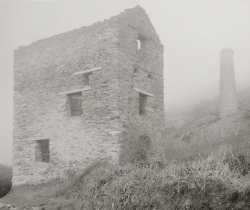
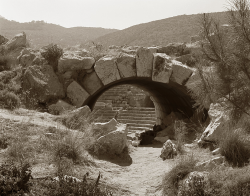
Pyrocat HD handles highlights and dynamic range extremely well, used normally, with no need for extended development, that's from around 17 years of using it in all extremes of weather. Foggy days in Cornwall through to harsh midday Summer light in Turkey and Greece.

1665384414600.png

1665384467655.png

Ian
 
It's not that expensive if you make the concentrate yourself from the ingredients. Also, there're some less known sellers who sell 510-Pyro for a reasonable price.

Btw did you expose Tri-X at box speed?

Yes, at ASA 400.

I do concoct my own Pcat variants and would do the same if I found 510 compelling. I was merely referring to the princely sum I paid to get a bottle for experimentation, and I am loathe to throw it out therefore.
 
Yes, at ASA 400.

a semi-stand development for 30mins with agitations at the 10/20 min points after a minute of initial agitation at full 1:100 dilution.

Maybe I'm looking at a different data sheet than you, but Rudiger Hartung's recommended semi-stand development time for Tri-x @400 is 16:25 minutes at 1:100 dilution. Your time of 30 minutes is close to what Hartung recommends for N+2 development. Generally, grain is more pronounced when the film is overdeveloped but I don't know if it is also the case when semi-stand developing is used.
 
Maybe I'm looking at a different data sheet than you, but Rudiger Hartung's recommended semi-stand development time for Tri-x @400 is 16:25 minutes at 1:100 dilution. Your time of 30 minutes is close to what Hartung recommends for N+2 development. Generally, grain is more pronounced when the film is overdeveloped but I don't know if it is also the case when semi-stand developing is used.

Generally, lower agitation should exhaust the highlights quickly and have a significant compensating effect. What I have found with Pyrocat-HD is that the whole business benefits considerably with very high dilutions (1.5:1:300) and very long time. When I tried this with 510 I got very poor results, hence I wanted to try full strength with very few agitations. However, now that I look again at the docs, it does seem like this duration would be excessive and could explain some of the grain issues. I'll have to retest when the opportunity presents itself.
 
Pyrocat HD isn't necessarily fine grained. Use it at a dilution of 2+2+100 and you get grain like that from Rodinal. This will be very noticeable with 35mm Tri X or Hp5. At a dilution of 1+1+100 it is fine grained, however. And I agree with Ian. There is no need to use extended, semi-stand development methods to get the best out of it....

Alan
 
Pyrocat HD isn't necessarily fine grained. Use it at a dilution of 2+2+100 and you get grain like that from Rodinal. This will be very noticeable with 35mm Tri X or Hp5. At a dilution of 1+1+100 it is fine grained, however. And I agree with Ian. There is no need to use extended, semi-stand development methods to get the best out of it....

Alan

It's funny how much religious fervor low dilution/extended development seems to engender. When I first started experimenting with it nearly two years ago, I had people tell me it was THE holy grail and others tell me there was "no need to use it" and still others tell me is was all snake oil. That's exactly why I decided to do these many experiments. Prints trump opinions.

My conclusions are that there are good outcomes from this technique, but that does not preclude other methods from also producing good outcomes. I found several direct benefits from using this approach - and these are demonstrated to my satisfaction:

  1. It eliminates the variability of changing effective ASA as development time is varied for N+/-. I always get box speed, even if I vary dilution to accommodate the scene SBR.
  2. For some subjects, the edge acuity enhancement of EMA are highly beneficial and aesthetically desirable. No so for all, hence I don't always use EMA.
  3. Most importantly (to me anyway), these techniques expand mid tone contrast without destroying highlights in ways I have never been able to achieve with any developer using conventional dilutions and agitation techniques. Especially in a high SBR, you either have to do N- to pull in the highlights (which destroys mid tone contrast in the ordinary case) or you develop for the mid tones and let the highlights block. In theory, staining developers will help you with those highlights by compensating them in some degree. Both PMK and Pyrocat-HD make this claim. The problem is that for many subjects being able to burn the highlights in to take advantage of this is often impossible if you have a complex burn line. EMA/Semistand makes this almost a non-issue because the highlights and shadows are both preserved more easily with good mid tone contrast
So I am neither religious nor dismissive of these techniques, they're just another arrow or three in the quiver.

Here is handhled 35mm Tri-X shooting a very big SBR, EMA developed in Pyrocat-HD 1.5:1:300 for an hour with short agitations on each quarter hour. I'd say both the acuity and grain behavior is pretty impressive for this very small format - scan of 8x10 print:


(I so wish I'd had a view camera on a tripod that day - this would have been a much better image.)
 
Last edited:
May an agnostic offer a comment? You’ve offered this image to illustrate acuity and grain so this may not be relevant.
On this screen (an important caveat) the shadows are solid black. Obviously more exposure would deal with this, but at the expense of pushing the brights even higher. Presumably this is an aesthetic choice.
However, when we come to those highlights, it’s not possible (again, on my screen) to see how much detail has been preserved, because the fine detail in the brightest areas is out of focus.
My apologies if I am missing the point. It often happens. I applaud your spirit of enquiry.
 
So there are two things at play here, I think:

First is our recurring friend, disjoint monitor calibrations. If you download the image and fiddle with the brightness you will see detail in most, if not all the darker areas. Recall that this is a scan of a print, not a negative, so there may be even more detail in the latter. Which leads us to ...

Secondly, as I have oft commented here and elsewhere, I do not abide by the idea that the monochrome photographer should slavishly seek to reproduce every tone and - in particular - preserve shadow detail in every part of the image. I used to work this way but found my work bland and images that didn't "sing". After I spent some time with the masters, Atget, Brassai, the Westons, et al, I realized that they happily let shadows go black when it served the image. Brassai (whose work I greatly admire) notoriously did this with great profligacy.

In this case, I am content with the choices I made. On both the print and my monitors, there is shadow detail under the foreground rock the diminishes as we recede into the darkest crevices (which, as I said, do have some detail if you fiddle the jpg). This serves to draw the eye to the textures of the lock and rocks behind it.

As and interesting side note, because I was handholding 35mm, I was using a fast lens (85mm f/1.4 Nikkor) that has very limited DOF. This put the far rocks somewhat out of focus. When I first looked I this, I thought, "It's a shame I didn't have my 5x4 - I could have brought that into snappy sharpness." But the more I look at this, the more it feels like the out of focus rocks again serve to draw the eye to the foreground rocks and lock.

P.S. Have another look at @Ian Grant's first image above. It is almost all high key with almost nary a shadow to be found, at least on my monitor. i.e., It's not a reproduction of the entirety of all tonal zones, yet it's a compelling image.
 
Last edited:
Thank you. Interesting stuff. I like Ian’s foggy picture too, partly because I’ve never has any success with fog.
As an aside, I believe that our own dear RPS once rejected Edward Weston’s pictures of dunes because they lacked shadow detail. Those were the days!
 
Thank you. Interesting stuff. I like Ian’s foggy picture too, partly because I’ve never has any success with fog.
As an aside, I believe that our own dear RPS once rejected Edward Weston’s pictures of dunes because they lacked shadow detail. Those were the days!

I think there is historical context for this that is relevant.

Prior to Minor White and Ansel Adams' systematizing what would become Zone System, there was a lot of magic and mystery around exposure control. Making good negatives was a dark art and every photographer had their own"special sauce" to try and properly capture a scene. As Zone System and it's cousins became widely accepted, the whole business became less magical and more a matter of consistent practice. Now shadows and highlights could be predictably managed and photographers flocked to this methodology in droves.

But an implicit desire to have the "whole range of light" in every picture started to creep in. There was almost a ritualistic commitment by photographers to make sure every single part of the tonal range got captured, especially as the photographic realists came to displace the romantics of the late 19th Century. By itself, that's not a terrible thing. The photographer behind the camera should give the photographer in the darkroom as many printing choices as possible so long as: A) local contrast in the important parts of the image is preserved and B) The photographer makes good decisions in the printing process and doesn't insist that every tone be in every print.

Being a slave to "all tones must be in every print" or "shadows should never be jet black" caused a lot of really terrible images to be produced. I know, I made many myself. Local contrast got clobbered and image aesthetics took a distant back seat to technical execution. Again, I mention the work of people like Brassai who'd lived well before the the Great Zone System Unleashing, and who had no problem letting shadows go nearly- or completely black. Edward Weston notoriously produced thin negatives ... and glorious prints. Brett Weston's abstracts were - in some cases - so high contrast and lacking shadow detail as to be almost more graphical than photographic, but they are astoundingly good.

Learning sound technique is important, but being enslaved by it is deadly. I personal went through this exact arc: 1) Having no idea how to repeatably create good negatives, 2) Breathing Zone system from my every photographic pore, including many hours in front of a densitometer and, more recently, 3) Thinking about the negative (and later, the print) as something you "design" for intended aesthetic effect.
 
You’re quite right of course. And so were the RPS. Some of Weston’s dune pictures are severely lacking in shadow detail. The fact that those shadows form elegant abstract shapes seems to have escaped the selectors.
My own thinking is that it’s good practice to have shadow detail present in the negative for later decisions in the darkroom, as you say.
 
The changes in technique in the 1930s comes about initially in Germany with the switch to miniature formats initially with the Leica and later the Contax, and more importantly the small hand held Selenium light meters introduced by Gossen in 1933, and AVO (UK) and Weston (US) in 1935. At the same time there were major advances in film technology in Europe, Ilford's new range of films the first of our modern generation Fine Grain Panchromatic Pan, and Hypersensitive Pan released in 1934, it was 4 years before Kodak caunght up with Plus-X, Super-XX, and Tri-Xmade in Rochester, Harrow & Kodak Ltd's new factory in Hungary. However by then Ilford had already upgraded the FP2 and HP2.

So with finer grain films, and new fine grain developers and the switch to smaller formats techniques had to change, over exposure and older style pyro or energetic MQ developers kill sharpness and increase grain. Hans Windisch wrote the first nook on modern technique, Die Neu Foto Schule in 1938, also published in English as The New Photo School, it was updated two decades later as The Manual of Modern Photography - The Technique.

These changes necessary to improve 35mm image quality also became common place with larger formats as well, it had nothing to do with the Zone System.

Ian
 
I seem to recall very old copies of AP and other publications containing all sorts of articles on magic developers for fine grain, increased speed improved sharpness, incredible virility and eternal life. Happily, those days are past. Can’t remember any of them, but contrast reduction seemed to be popular too. Not a whisper of Zones.
 
The changes in technique in the 1930s comes about initially in Germany with the switch to miniature formats initially with the Leica and later the Contax, and more importantly the small hand held Selenium light meters introduced by Gossen in 1933, and AVO (UK) and Weston (US) in 1935. At the same time there were major advances in film technology in Europe, Ilford's new range of films the first of our modern generation Fine Grain Panchromatic Pan, and Hypersensitive Pan released in 1934, it was 4 years before Kodak caunght up with Plus-X, Super-XX, and Tri-Xmade in Rochester, Harrow & Kodak Ltd's new factory in Hungary. However by then Ilford had already upgraded the FP2 and HP2.

So with finer grain films, and new fine grain developers and the switch to smaller formats techniques had to change, over exposure and older style pyro or energetic MQ developers kill sharpness and increase grain. Hans Windisch wrote the first nook on modern technique, Die Neu Foto Schule in 1938, also published in English as The New Photo School, it was updated two decades later as The Manual of Modern Photography - The Technique.

These changes necessary to improve 35mm image quality also became common place with larger formats as well, it had nothing to do with the Zone System.

Ian

That is all quite true and beside the point I was making - the obsession for "all tones must be in all images" was very much driven by the popularization Zone System (and its derivatives). It was so common as to become fadish. You really see this in the popular literature after Adams published his 3 book series.
 
I happened to be looking in the 1934 BJP Almanac, only one Fine Grain developer is listed, D76, by 1937 a number of fine grain developers are listed, that increases substantially by 1939.

Ian
 
On the bright side it must have been manna from heaven for the makers of densitometers. Is this when the Church of the Holy 0.01 above Base+Fog arose?
 
On the bright side it must have been manna from heaven for the makers of densitometers. Is this when the Church of the Holy 0.01 above Base+Fog arose?
Presumably this popularized it though there were more formal sensiometric texts to be found.
 
Last edited:
I happened to be looking in the 1934 BJP Almanac, only one Fine Grain developer is listed, D76, by 1937 a number of fine grain developers are listed, that increases substantially by 1939.

Ian

I guess Johnsons Meritol super fine grain developer was introduced around the same time. Was there any other Meritol fine grain developer before Johnsons?
 
Back
Top