A Bit More On 510 Pyro And Grain

I guess Johnsons Meritol super fine grain developer was introduced around the same time. Was there any other Meritol fine grain developer before Johnsons?

Meritol was only made and used by Johnsons, Edmund Lowe did try it but by just mixing the relevant proportions of PPD and Pyrocatechin.

On the bright side it must have been manna from heaven for the makers of densitometers. Is this when the Church of the Holy 0.01 above Base+Fog arose?

I think it spawned a US obsession for even amateurs to use a densitometer. Here in the UK we preferred more practical testing, and the best advocate of that is John Blakemore. And his dexterity of using extremes is the opposite of @thronobulax's comments about slavishly following AA or MW.

I know I've said it before but John Blakemore's use of craft makes Ansel Adams look like a beginner, but then he's a generation or two later.

That raises another issue, mastery of craft and technique allow you to choose which directions you want to go in with confidence, and there is not a definitive way of working. We make our own choices.

Ian
 
I know I've said it before but John Blakemore's use of craft makes Ansel Adams look like a beginner, but then he's a generation or two later.

I tend to agree about Adams. I know the body of his work pretty well and find it mostly average aesthetically. He was a wonderful teacher and expositor of craft, though, and should be acknowledged as such. While Adams certainly did some memorable work, I consistently find Edward and Brett Weston's work far more compelling. Interestingly, some of his students like Sexton did/do considerably better work, I think, though a little of Sexton goes a very long way with me as well.

Now, I could use a bit of direction. I have only very briefly dipped into Blakemore's work and - thus far - have not found it resonant or interesting. This is almost certainly due to my own ignorance. Can you (or anyone) point me to a place that would help absorb this greatness upon which you're commenting. I am genuinely interested.
 
Perhaps this can be of some help:
 
I've seen a lot of Ansel Adams, he was nor a particularly good printer in his earlier years. There was a large exhibition at the Barbican "Classic Images" in London, around 1989 and the prints were superb, however there was a smaller touring exhibition of images from his daughter's collection, around 2011/2, I saw it twice first in Oxford and later in Edinburg, the quality of the many of the prints was disappointing, this was a general view not just my own.

1665819004033.png

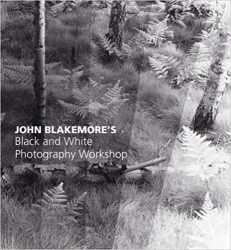
This Blakemore book is essentially based on his teaching and workshops.

1665819157142.png

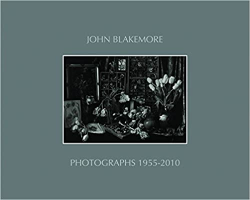
I was lucky enough to get a copy of this book, at a decent price on another UK forum. There's a copy on Amazon £380, I paid around a tenth of that :D

The image quality on the "Lila" page Raghu linked to is not remotely representative of John Blakemore's work, nor are the other images on the website. Very odd.

This is the reproduction quality in the 2ndbook I mentioned.

Ian
 
Ian is being very kind to Ansel’s early prints; they were rubbish.
I’m afraid you probably need to see John’s prints in real life to appreciate them. As we’ve acknowledged before on this forum the screen is a poor servant of subtlety.
Part of John’s reputation must be based on his teaching style - unflaggingly kind, humorous, relaxed. My experience is that he tries to find out what a photographer is trying to do before commenting. Some teaching styles make exposure and printing feel like fighting hungry tigers, naked.
 
The image quality on the "Lila" page Raghu linked to is not remotely representative of John Blakemore's work, nor are the other images on the website. Very odd.

Yes, I too was baffled by the dull images on that page, but then if you click on the individual images, you get to see a much better looking image.
 
Ian is being very kind to Ansel’s early prints; they were rubbish.
I’m afraid you probably need to see John’s prints in real life to appreciate them. As we’ve acknowledged before on this forum the screen is a poor servant of subtlety.
Part of John’s reputation must be based on his teaching style - unflaggingly kind, humorous, relaxed. My experience is that he tries to find out what a photographer is trying to do before commenting. Some teaching styles make exposure and printing feel like fighting hungry tigers, naked.

I would suggest that everyone's early prints were rubbish ;)

Adams was reputed to be a kind teacher who genuinely sought to help his students. The "fighting hungry tigers, naked" phenomenon followed him as some of his expositors tried to turn Zone System into holy writ. (I'm looking at you Beyond The Zone System.) I would suggest the "all zones in all prints" came from this bunch.

I happily found the Fred Picker synthesis of ZS early on that extracted the essence of the approach in a few short chapters in a small book. I never looked back. Though I'd read Adams from cover to cover, it was Picker that made it practical and useful to me ... though I freely confess I did buy a simple densitometer (now useless to me with staining film developers.)
 
Yes, we all must start somewhere. To be fair, I think they were exhibited for their historic value. It greatly encouraged me to see that I wasn’t alone.
I’m afraid that Mr Picker seemed to me push simplification just a step too far. Nevertheless we must credit him with spreading the word enthusiastically.
 
Hi @thronobulax , the 510 Pyro 1:100 dilution semi stand time for Tri X is 16:25

You did almost double the time! We recommend you try again with our recommendation.

Please share the results.

A while back I took a brief look at 510 Pyro and found it to be competent but not a compelling alternative to Pyrocat-HD or D-23.

The one last thing I wanted to try was doing a semi-stand development for 30mins with agitations at the 10/20 min points after a minute of initial agitation at full 1:100 dilution. This is approximately semi-stand model recommended in the developer instructions. My prior forays had been considerably more diluted and longer.

I purposely chose Tri-X in 35mm because this combination punishes developers that do not handle grain gracefully. As it happens, I'd just done some 35mm Tri-X in Pyrocat-HD of similar subjects so I was able to make a reasonable, if not scientific, judgment.

Based on this, I would say that 510 Pyro has noticeably inferior grain behavior than Pyrocat-HD. With this film and format, some grain is inevitable, but the 510 Pyro results were noticeably more grainy than the Pcat.

I will say that it handles highlights and dynamic range well if you use extended/low dilution development but there simply isn't anything there - in my opinion - justify adding yet another developer to my workflow. It's also gastly expensive, so I'll keep what's left around for possible future experimentation but it's not getting first citizen treatment.
 
Hi @thronobulax , the 510 Pyro 1:100 dilution semi stand time for Tri X is 16:25

You did almost double the time! We recommend you try again with our recommendation.

Please share the results.

I may at some point do so, but I am reasonably convinced that Pyrocat-HD is substantially cheaper and delivers consistently great results. Note that I do not hold that there is One True Way. Everyone's process is their own and there are many ways to get to a wonderful end result. So, if people find 510 compelling, that's fine with me.

I do have a bit left that I diluted with glycol and am storing in a brown glass bottle. When the occasion arises, I may revisit it.
 
Last edited:
I may at some point do so, but I am reasonably convinced that Pyrocat-HD is substantially cheaper and delivers consistently great results. Note that I do not hold that there is One True Way. Everyone's process is their own and there are many ways to get to a wonderful end result. So, if people find 510 compelling, that's fine with me.

I do have a bit left that I diluted with glycol and am story in a brown glass bottle. When the occasion arises, I may revisit it.
We respect that you may prefer other developers. That is the best thing about choice and a free world!
 
Back
Top