First paper negatives

lensworx

Popular Poster
Registered User
Joined
Jun 5, 2024
Messages
61
Hi all
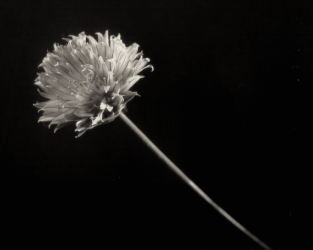
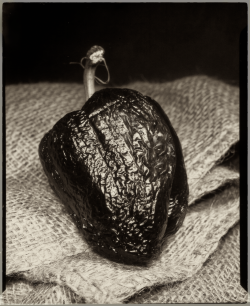
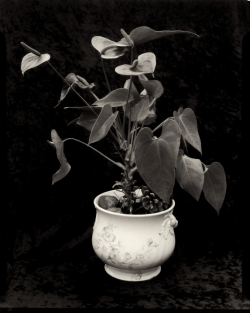
Spent a few hours this afternoon trying to get to grips better with still life / macro on a LF camera. To make matters that little bit more interesting I decided to do some more testing and throw in some paper negatives for good measure.
Was a very productive afternoon and a completely different experience to what I am used to.

Been a long time since I did anything like this and I need to sort my gear out and get some proper lights again if I am going to do more of this.

Pretty happy with the final results however given what I was working with. Not my finest work ever but still happy with them

A lit using a LED desk lamp and a LED strip work light.
These are only low-res scans from a 3-1 and then processed in photoshop.
Ilford MGV Paper, Pre-flashed.
Developed in Bellini D100 @ 1:19
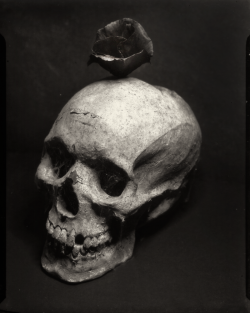
skull_poppy.png
chive flower.png
pepper 1.png
 
Thanks Both.

I still need to do some further testing, more so for shooting outdoors to try and control the contrast a little more.

The decaying skin adds a new dimension to a pepper image. Nicely done.
Thankyou I have been waiting over a week for it to get to this point and was thinking about leaving it even longer.
I may actually grab another (maybe in a different colour) and do a whole series as it decays
 
Managed to get a chance this afternoon to try and dial in the settings a little more with a yellow filter etc...

Pretty pleased with how this one came out.

Ilford MG V - Yellow Filter f/22 @ISO 3 - Spot metering on front leaf

flower yellow filter.png
 
One of the first things I did when I got a real camera was to try photographing a pepper. It taught me two things. Firstly that Mr Weston’s camera must have had very long bellows indeed and secondly that you can’t get those baroque, convoluted peppers any more. Good news for cooks, bad news for photographers.
 
One of the first things I did when I got a real camera was to try photographing a pepper. It taught me two things. Firstly that Mr Weston’s camera must have had very long bellows indeed and secondly that you can’t get those baroque, convoluted peppers any more. Good news for cooks, bad news for photographers.
I read somewhere that Mr Weston used a pinhole for his famous pepper image which gave the deep depth of field with an exposure of 8+ hours which accounts for the beautiful lighting as the sun moved. There's an interesting interview with his grandson on YouTube somewhere.
 
Zeiss Lens. 210mm. Min aperture f36. After that, information is contradictory. Exposure 6 mins or 6 hours (Or possibly four). < Aperture f240. A one millimetre home made Waterhouse stop. Didn’t find any reference to bellows extension or reciprocity.
My understanding is that Edward was an intuitive, hands-on worker, much less technically obsessed than other members of f64.
Although Pepper No 30 looks quite sharp, it isn’t really, but better than pinhole. His Dead Pelican image is much sharper, with fine detail in all the feathers, but that was taken in Californian beach sunshine.
The pepper itself is far from perfect. It wouldn’t be used for a food shoot today, but Edward had been working on it for a week already and we know it had had some tumbles.
 
So Edward Weston was a member of the f64 group, but his lens only stopped down to f36....
 
Yes, indeed. Seems odd doesn’t it? f64 was never a formal group, with strict entry qualifications and rules. If Edward Weston wanted to join your group, would you turn him away? *
In any case, this is the result of a quick Google search. Some of the details seem constant across different sources, but the exposure time varies widely. It seems that Edward’s major difficulty was the peppers falling over when heavy vibration from traffic nearby dislodged them. The funnel provided both a secure support and a harmonious background. The very long exposure times, with slow film, a tiny aperture and reciprocity combined don’t seem unrealistic to me.
We might assume that the previous twenty-nine peppers had given Edward an insight into the required exposure. Perhaps I should look out my Daybooks.

* As a matter of fact, our own dear RPS rejected some Weston pictures of dunes because of insufficient shadow detail.
 
Back
Top