

-
Thank You For Visiting... Please Click Here and sign up to contribute and reply to posts and download the resources.
You are using an out of date browser. It may not display this or other websites correctly.
You should upgrade or use an alternative browser.
You should upgrade or use an alternative browser.
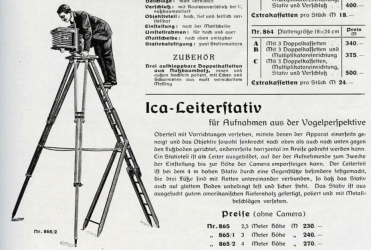
anyone using detachable tripod legs?
- Thread starter Alan Clark
- Start date

- Joined
- Aug 9, 2016
- Messages
- 847
I like this set-up. It could be very useful when photographing adders on the North York Moors
To see through the 'analysis paralysis' it can help to list each of the factors you consider important for your intended application and compare the different tripod designs for stability, weight, cost, ease of use etc. Give each factor a score and add them up.
Yesterday I assembled the std legs to a Sanderson regular model , this uses the std ring with 6 holes for the std 3 section legs top section hinged two part pegged shafts under tension at the ring end.
First thing to note is that this is an extremely precarious operation with the folded camera in one hand and the extended legs being added with the other hand extending the legs after connecting the legs is slower and takes more steps but possible, it brings a whole new meaning to “the dance” penned by MM , you literally have to cuddle the melange of camera/legs.
So having the camera separable from the top ring/platform/legs is very desirable and I think it’s fair to note that it is no longer common practice (very Lotus F1car design though)
Next thing is that whilst it’s perfectly usable it’s not rock steady the camera will move in a springy manner , reasonably damped a finger will speed stopping any oscillation , this is partly down to the pegged ring joints and partly the lack of mass in the whole structure.
My view is that it is a compromise based on lightness and simplicity as the primary goals , oh and subjectively it looks very integrated wood-brass-wood.
I view a tripod as 3 components head/shoulders/legs
The head has to join to the shoulders in such a way as to not have any play whatsoever that is all.
The shoulders are the most important part of the assembly- to join the head and legs with no play , the joint between the legs and shoulders is the most critical .
The legs need to connect to the shoulders with the least play , after that it’s a compromise of rigidity and size/folding/telescope … no slip feet.
So my conclusion is that the pegged shoulders are the weak link for the brass ring style.
Sorry it’s a long post and no Pictures
First thing to note is that this is an extremely precarious operation with the folded camera in one hand and the extended legs being added with the other hand extending the legs after connecting the legs is slower and takes more steps but possible, it brings a whole new meaning to “the dance” penned by MM , you literally have to cuddle the melange of camera/legs.
So having the camera separable from the top ring/platform/legs is very desirable and I think it’s fair to note that it is no longer common practice (very Lotus F1car design though)
Next thing is that whilst it’s perfectly usable it’s not rock steady the camera will move in a springy manner , reasonably damped a finger will speed stopping any oscillation , this is partly down to the pegged ring joints and partly the lack of mass in the whole structure.
My view is that it is a compromise based on lightness and simplicity as the primary goals , oh and subjectively it looks very integrated wood-brass-wood.
I view a tripod as 3 components head/shoulders/legs
The head has to join to the shoulders in such a way as to not have any play whatsoever that is all.
The shoulders are the most important part of the assembly- to join the head and legs with no play , the joint between the legs and shoulders is the most critical .
The legs need to connect to the shoulders with the least play , after that it’s a compromise of rigidity and size/folding/telescope … no slip feet.
So my conclusion is that the pegged shoulders are the weak link for the brass ring style.
Sorry it’s a long post and no Pictures
- Joined
- Aug 9, 2016
- Messages
- 847
Nickl that sounds complicated, and a bit too scientific for me. Fortunately I have a simple practical test that works well with my equipment. The sherry glass test. Set the camera up outside, on its tripod. Attach the cable release and cock the shutter. Then fill a sherry glass with water and place it on the camera, preferably on top of the front standard. If this is impossible to do with a glass, use a flat screw top tin lid. Then take hold of the cable release, fire the shutter and watch to see if any ripples appear in the water.To see through the 'analysis paralysis' it can help to list each of the factors you consider important for your intended application and compare the different tripod designs for stability, weight, cost, ease of use etc. Give each factor a score and add them up.
My tripod is a carbon fibre Manfrotto 441, and the head is a very stable ball and socket. When I do this test with my home-made lightweight 5x4 camera , fitted with a 203mm Kodak Ektar, I get absolutely no ripples. But the same test done with my Shen Hao camera fitted with a 210mm Apo SYmmar lens, shows up real problems. If there is even a slight breeze, the water ripples all the time, even when I'm not touching it. Just picking up the cable release caused ripples. These increase when the shutter is fired.
So why not just use my home-made camera? Well, I actually prefer to use the Apo Symmar. The controls are easier to see. But it is too big to fit on my small home-made camera.
If the Shen Hao was fitted to a wide topped tripod, without a head -which is what we have been talking about- it would be more stable. Alternately I could make a very stable home-made wooden camera to fit on home-made tripod legs with a wide top unit. The camera would rotate. To get it to point up or down the tripod legs would have to be adjusted. My original question was, how easy is this to do?
So far I've had a few answers which seem to vary from "fairly easy" to "not very easy". So I'm still undecided about what approach to take.
Last edited:
- Joined
- Aug 9, 2016
- Messages
- 847
How Large. Thanks for your very helpful post, which seems to have appeared whilst I was writing my last one.
It's true what HowLarge said about the attachment process being something of a precarious dance. I knocked my helpful wife on the head with one tripod leg when it escaped my clutches. I usually assemble upside down with the focussing cloth as a cushion (so one can see the holes for the pins) and then flip the assembly over. For height adjustment I drilled 3 dimples, equispaced along the adjustable legs. On my design a thumbscrew then clamps into the dimple. (I tried a friction clamp but it didn't work as well). On a level surface one should get a level camera with equisplayed legs. For architectural photography (my main interest) 'pointing up or down' is usually done by rise and fall on the front standard, or secondly, changing the angle of the tripod legs. To move to a different dimple position after assembly is possible, but is best done at the start.