development film

Louis

Registered User
Joined
Feb 11, 2026
Messages
10
Hello
Can anyone help me?

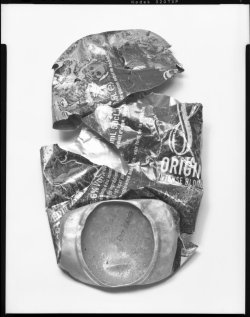
When developing my 4×5 Kodak Tri-X 320 sheet film in HC-110 using a Stearman SP-445 tank, I consistently get this band along the top edge of the sheet that doesn't seem to develop like the rest of the negative.

Does anyone know what could be causing this?

I'm using a Zone VI 4×5 camera with a Rodenstock APO 210mm lens.

Thanks in advance for any advice.
 
If you can post an image of the affected area, it'll make it easier to diagnose.

Mike
 
hereafter image see up the image
 

Attachments

  • 741DD618-3D7A-4557-AAC7-FE8E212201E1_1_201_a.jpeg
    741DD618-3D7A-4557-AAC7-FE8E212201E1_1_201_a.jpeg
    72 KB · Views: 23
If the band looks the same or nearly the same on all the sheets it could be that it’s a light leak to the film in it’s bag/box - check where the notch is in the packet
 
If the band looks the same or nearly the same on all the sheets it could be that it’s a light leak to the film in it’s bag/box - check where the notch is in the packet
It's a dark band on the image so it's not going to be a light leak.

One option is that you're not using enough liquid in the development tank to fully cover the film, if the dark band corresponds to the top of your tank. But the Kodak lettering is there so maybe not. Doesn't look to eat into the rebate either.
 
I've read that incorrect agitation can be the culprit of this kind of banding in Stearman SP-445 tanks.
It certainly looks like the banding could be the result of over/under development.
 

Attachments

  • SP-445_BEGINNER_INSTRUCTIONS.pdf
    377.6 KB · Views: 3
My mistake - dark light leak.. yes agitation, maybe check volume of developer used with same measure of water and a spare exposed sheet with the lid off to see if there is a possibility that the sheets are barely covered?
 
Thanks everyone for your suggestions.

I made two test sheets against a white background, one at f/5.6 and the other at f/11. I developed both films, and the dark band has completely disappeared.

I'm using a Stearman processing tank, and I also checked that the level of the chemicals was correct. before I use to job tank 2523 and I has same defect.
Could the bellows lens hood be the cause of this when using the 210mm APO-Symmar?
 
I'd agree with Dave & David, looks like the top edge has not been fully immersed in the developer. It may have shifted during agitation.

You are only using a very small part of a 210mm lens image circle on 5x4, and even less on a close-up like this. So highly unlikely the bellows lens hood is the issue,

Ian
 
Hello everyone,

Thank you all for your feedback and for taking the time to discuss this with me.

I'm now leaning towards the hypothesis that the compendium lens hood was extended too far for the 210 mm lens. I made another test without the lens hood and without any subject—only the white background—and the problem disappeared.

Thank you all again, and happy shooting!

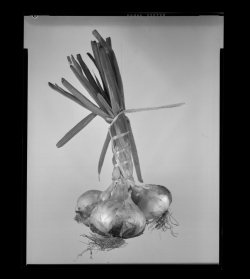
I've attached another image.
 

Attachments

  • img0226.jpeg
    img0226.jpeg
    117.1 KB · Views: 7
If you look closely at the onion image you can see slight development streaks, ect, any clipping by the hood would have a pronounced fall off.

I just dug out my compendium hood, put my 210mm Symmar S on a 10x8 camera, at 4" the hood does not clip at all on the 10x8 screen, it does at 4½", by about ¾" on the 19"sides nothing on the 8" sides. That's focussed at about 25ft, but with 5x4, and then also closeup work you are using an even narrower angle, so even harder to vignette.

Ian
 
OK Ian, thanks for your comments.

I made two sheets this afternoon: one still life and one view of my studio, both without the lens hood. The still life was taken with a significant amount of rise/shift. I also made both exposures without the filter holder.

Your comments make sense. You're probably right that it wasn't the lens hood itself, but perhaps I hadn't mounted it correctly on the lens.

Tomorrow I'll make some more exposures using the lens hood (Lee Filters) and I'll report back with my findings.

Have a good evening.
 
The bellows can cut off part of the image when you’re using extensive rise, fall or shift. So can a lens hood, in the same way. The answer is to check through the corners of the ground glass with the lens wide open. You should be able to see a complete ellipse of light. Stopping down may ameliorate the problem in a marginal case.
The solution is to reconfigure the camera so you need less extreme movements.
it’s hard to see that the onion picture needs any movements at all.
A similar problem is that at relatively long bellows extensions, the bellows can droop into the light path. Finding a way to prop it up is easy. Coincidentally, I find my loupe does a good job.
 
If it was insufficient developer wouldn’t the rebate with the Kodak writing be under developed?
 
Back
Top