
Install the app
How to install the app on iOS
Follow along with the video below to see how to install our site as a web app on your home screen.

Note: This feature currently requires accessing the site using the built-in Safari browser.
-
Thank You For Visiting... Please Click Here and sign up to contribute and reply to posts and download the resources.
You are using an out of date browser. It may not display this or other websites correctly.
You should upgrade or use an alternative browser.
You should upgrade or use an alternative browser.
How do you increase contrast when photographing trees, trunks, logs etc
- Thread starter Camerashy
- Start date
- Joined
- Aug 29, 2020
- Messages
- 1,370
Film, filters developer for increasing short sbr and extending development time, what combinations do you use?
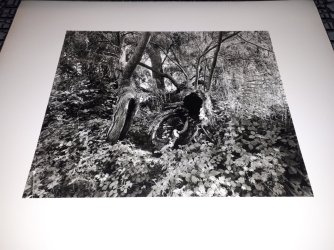
I use semistand or EMA development techniques to expand midtone contrast. For example, this was shot on a dull, flat day with a very short SBR to speak of:
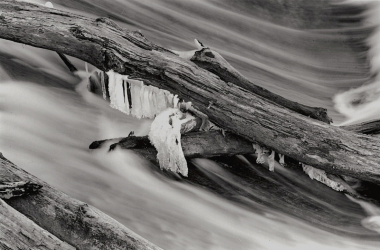
Efke PL100M, Pyrocat-HD 1.5:1:200, EMA, scan of silver print
Last edited:

- Joined
- Apr 29, 2019
- Messages
- 166
What difference does increasing part A to 1.5 make?I use semistand or EMA development techniques to expand mid tone contrast. For example, this was shot on a dull, flat day with a very short SBR to speak of:
View attachment 6535
Efke PL100M, Pyrocat-HD 1.5:1:200, EMA, scan of silver print
- Joined
- Apr 29, 2019
- Messages
- 166
IWhat difference does increasing part A to 1.5 make?
- Joined
- Aug 29, 2020
- Messages
- 1,370
What difference does increasing part A to 1.5 make?
This ratio was suggested by Sandy King (the father of Pyrocat) when exploring extended development schemes.
The more important thing is the higher dilution is needed when you're going to leave film in developer for a really long time. These days, I am more likely to use 1.5:1 to 250, 300, or even 500.
It's a tricky process to get right and I've made my notes available to anyone interested. This explains the risks, benefits, pitfalls, and noisy flailing on the internet that surrounds the whole subject:
tundra/Stand-Development
 gitbucket.tundraware.com
- Joined
- Aug 29, 2020
- Messages
- 1,370
I often feel it's better to lean into low contrast scenes, embrace the greyscale and lower dynamic range rather than fight it.
Alternatively, I'd save the scene for a day with better/more appropriate light, if possible.
Well, it does take some thought and effort to handle a short SBR, but the rewards can be great. Using darkroom magic to expand the midtones in such settings can bring forth really nice images.
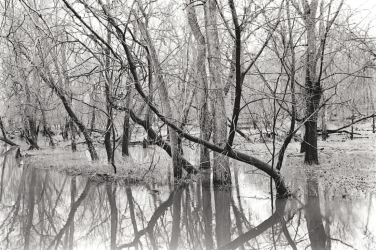
An example, if I may. This was shot in an absolutely flat grey day after a rainstorm. The scene as presented was completely uninteresting at first glance. But developing Acros II via EMA and split-VC printing gave me a print I very much like. Scan of silver print:
This is an example of what I mean, and while not woodland, it was taken on an 'uninspiring' dull and overcast day. The sky and clouds acted like a huge diffuser (and reflector) lifting the shadows and softening the highlights. The result is an abundance of detail throughout the scene. And personally, I find it's very much about the compression, I doubt anything in the way of maximum black or paper white, and a celebration of grey tones that make this print work, for me.
Print on Fomatone 131 mg wt fb glossy sloshed in Bromophen.
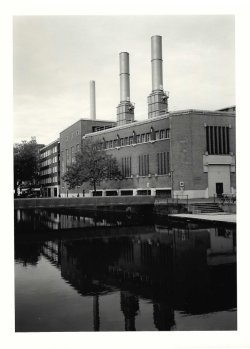
Print on Fomatone 131 mg wt fb glossy sloshed in Bromophen.
As a matter of fact, I think it's fair to say, that my woodland scenes often suffer from too much contrast, so the opposite problem to what the OP is experiencing.
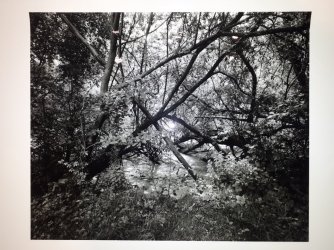
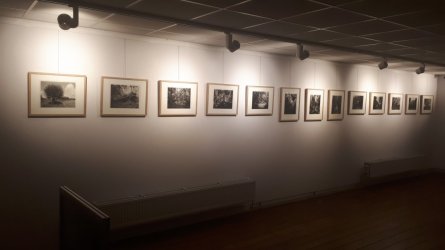
Here are some Photo's from an exhibition shown shortly after covid.
These were all taken on 4x5" with a 75mm lens on a fixed bodied camera and darkroom printed on 16x20" paper.
Please, excuse the poor snaps.
Here are some Photo's from an exhibition shown shortly after covid.
These were all taken on 4x5" with a 75mm lens on a fixed bodied camera and darkroom printed on 16x20" paper.
Please, excuse the poor snaps.
Attachments

- Joined
- Dec 19, 2017
- Messages
- 3,527
There seems to be some confusion, decreasing a developers concentration lowers contrast., and conversely increasing concentration increases contrast.
And the high dilutions of developers like Pyrocat HD, Rodinal, etc, also have a compensating effect as the developer exhausts. ULF shooters began using semi-stand, and extra dilution to increase Mackie effects, which helps increase apparent sharpness when ULF negatives are contact printed.
I agree with your earlier post, I've never needed to adjust development to increase contrast when shooting with trees dominant in images, I might have to use N-2 development where the contrast is high,
I use very similar frames Marty
Ian
And the high dilutions of developers like Pyrocat HD, Rodinal, etc, also have a compensating effect as the developer exhausts. ULF shooters began using semi-stand, and extra dilution to increase Mackie effects, which helps increase apparent sharpness when ULF negatives are contact printed.
As a matter of fact, I think it's fair to say, that my woodland scenes often suffer from too much contrast, so the opposite problem to what the OP is experiencing.
Here are some Photo's from an exhibition shown shortly after covid.
These were all taken on 4x5" with a 75mm lens on a fixed bodied camera and darkroom printed on 16x20" paper.
Please, excuse the poor snaps.
I agree with your earlier post, I've never needed to adjust development to increase contrast when shooting with trees dominant in images, I might have to use N-2 development where the contrast is high,
I use very similar frames Marty
Ian
- Joined
- Apr 29, 2019
- Messages
- 166
There seems to be some confusion, decreasing a developers concentration lowers contrast., and conversely increasing concentration increases contrast.
And the high dilutions of developers like Pyrocat HD, Rodinal, etc, also have a compensating effect as the developer exhausts. ULF shooters began using semi-stand, and extra dilution to increase Mackie effects, which helps increase apparent sharpness when ULF negatives are contact printed.
I agree with your earlier post, I've never needed to adjust development to increase contrast when shooting with trees dominant in images, I might have to use N-2 development where the contrast is high,
I use very similar frames Marty
Ian
- Joined
- Aug 29, 2020
- Messages
- 1,370
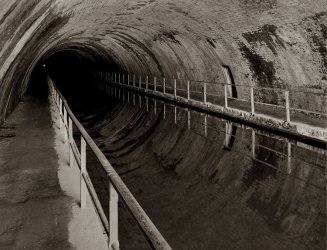
This is an example of what I mean, and while not woodland, it was taken on an 'uninspiring' dull and overcast day. The sky and clouds acted like a huge diffuser (and reflector) lifting the shadows and softening the highlights. The result is an abundance of detail throughout the scene. And personally, I find it's very much about the compression, I doubt anything in the way of maximum black or paper white, and a celebration of grey tones that make this print work, for me.
Print on Fomatone 131 mg wt fb glossy sloshed in Bromophen.
View attachment 6539
I love those days as well. The challenge I always find is making the sky interesting, or minimizing an uninteresting sky's intrusion into the scene.
- Joined
- Apr 29, 2019
- Messages
- 166
So after some trawling on the net I found this,
 m.youtube.com
Conclusion.
Extending development increases overall negative contrast and density.
Underdevelopment gives a thin negative that can be used with higher contrast filters in the enlarger to get better tonal separation between shadow and mid tones.
Long exposures can increase contrast slightly but not enough to worry about if printing on VC paper
High Alkaline developers produce more contrast and larger grain.
Yel/green, green, orange or red filters can be used to increase the difference in tones between colours in the scene.
Have I missed understood or missed anything?
- YouTube
Enjoy the videos and music that you love, upload original content and share it all with friends, family and the world on YouTube.
m.youtube.com
Conclusion.
Extending development increases overall negative contrast and density.
Underdevelopment gives a thin negative that can be used with higher contrast filters in the enlarger to get better tonal separation between shadow and mid tones.
Long exposures can increase contrast slightly but not enough to worry about if printing on VC paper
High Alkaline developers produce more contrast and larger grain.
Yel/green, green, orange or red filters can be used to increase the difference in tones between colours in the scene.
Have I missed understood or missed anything?
- Joined
- Dec 19, 2017
- Messages
- 3,527
I guess what's missing is you expose for the shadows and develop for the highlights. In practice if you increase contrast bu extending the development time you need to decrease exposure slightly. And conversely if you decrease contrast by reducing development you need to increase exposure slightly.
N is normal exposure and development, N- is reduced development to lower the contrast requiring an increase in exposure. N+ is the opposite.
Ian
N-2 | N-1 | N | N+1 | N+2 |
9.5 | 12 | 15 | 18 | 21.5 |
+1 Stop | +½ Stop | | | -½ Stop |
N is normal exposure and development, N- is reduced development to lower the contrast requiring an increase in exposure. N+ is the opposite.
Ian
I have a question about your darkroom filters;
1. Are you using a colour head or condenser head?
2. Which make and model?
3. Are you using above or below lens filters?
4. Were the filters bought new or 2ndhand and how old are they?
1. Are you using a colour head or condenser head?
2. Which make and model?
3. Are you using above or below lens filters?
4. Were the filters bought new or 2ndhand and how old are they?
- Joined
- Dec 19, 2017
- Messages
- 3,527
These days I've use a De Vere 5108 with a Dichroic colour head for LF, and a Durst M605 again with a colour head for MF and the odd 35mm neg.
Prior to getting the 5108 I used a Johnson V45, with a De Vere Cold cathode head, and below the lens filters, after Record Rapid was discontinued. I didn't find any difference printing with either filters or a colour head.
Ilford's Multigrade below the lens filters last well, I used a set for quite a few years. The filter drawer filters don't last as long as they are stored in card, which will have a moisture content.
Ian
Prior to getting the 5108 I used a Johnson V45, with a De Vere Cold cathode head, and below the lens filters, after Record Rapid was discontinued. I didn't find any difference printing with either filters or a colour head.
Ilford's Multigrade below the lens filters last well, I used a set for quite a few years. The filter drawer filters don't last as long as they are stored in card, which will have a moisture content.
Ian