Loupe advice

I use a Peak 4x loupe (No. 2038) with adjustable focus. It has a square base (sometimes useful for seeing to the corners of the ground glass) which is removable. The loupe came with a black or transparent base. I find the transparent base works best for me.

On the topic of fresnel screens, I bought the Intrepid screen & modified it to fit flush onto the existing ground glass on my old half-plate. The order I've used is lens, ground glass, fresnel surface, plain plastic surface. The image is still on the ground glass so focus isn't affected by adding the fresnel. I haven't noticed any scuffing on its plain surface, but I try to lift and reposition rather than slide the loupe around.
 
Most all of the Tachiharas, both 4X5 and 8X10 appear to have fresnels fitted as if it were standard.
They are all on the outside of the ground glass (as far from the taking lens as possible).

My Toyo 45A had the Fresnel behind the ground glass (between the lens and the GC) but by all accounts this was standard Toyo practice. I f you wanted to change the order of the focus surfaces it would require a spacer to maintain correct registration.

Anyhoo, I have gone off topic. Regardless of convention, my camera has the fresnel fitted as far from the objective as can be.
As such, my quest for a loupe with a soft resting face is still drawing blanks.
 
I just Googled and found all sorts of suppliers selling from 1mm, 1.5mm, etc

Yes, 1mm to 1.5mm glass which us actually "acrylic" or "PET", and would be even better than "mineral" glass for protection of a fresnel.
The issue is a wooden ground glass focus frame made for just a GG screen doesn't usually have space for a fresnel and additional cover glass on top of the existing screen.

Glass thinner than 2mm is prone to breakage, and when it does it often splinters with sharp slivers. Green house glass and picture frames used to use 1.5mm to 1.8mm glass, EU regulations changed that any sheet glass sold to the public, including picture frames, must use a minimum of 2mm glass while green houses now use 3mm or 4mm glass.

Of course there are specialist glasses thinner than 2mm for scientific uses,0.5mm and 1mm are common, but not suitable for our uses, and come in small sizes.

Ian
 
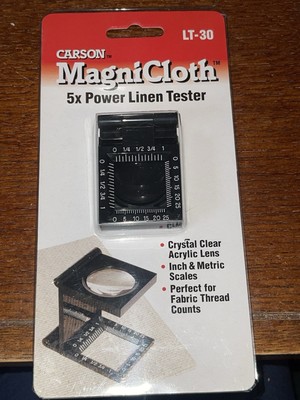
I have lost several loupes. I now have one of these (bought on uk ebay)
Works really well, lives in a little tin and stays on a ribbon around my neck.
.
I also have an older silver-ish magnifier with a loop that I often wear around my neck when I’m working large format. Flat, light, handy and comfy to wear. Not a loupe but does most of the job, most of the time.
 
I have a couple of these...cheap enough under a £fiver

I have one of those, although mine is antique, over 100 years old, they are not ideal.

Photographers loupes were made for dual use at one time, first checking LF camera focus, and if you shot transparency film checking the results on a light box. You need a loupe that is sharp over a reasonable area, 24mm x24mm, or 24mm x 36mm like the Nikon loupe, sold under other brand names.

What you also have to take into account was fresnels were supposed to alleviate the need for a loupe. Kodak introduced the Ektalite fresnels for the Pacemaker Graphics, to make focussing very easier for hand held use. I have shot with a Crown and later Super Graphic hand held since around 2007 & on a tripod, never needing a loupe.

Ian
 
.......and heres me thinking a magnifier is a magnifier :D
 
One solution to the scratching problem would be Melinex. It’s the stuff that superior neg and trannie sleeves are made of. Glass clear and very thin, so easily cut to size. Cheap enough to replace as often as needed.
 
Never thought about it..but I have what is known as dental splints...(Optically clear plastic for vacuum moulding teeth guards etc.) I use for vacuum forming- modelling purposes....trouble is they are only 4x4" albeit 1mm thick and cost in packs of 15 around £15 (EBAY)
 
Thanks everyone.
I finally settled for a a Kaiser X10 loupe which can be dioptically adjusted.
It is quite a high magnification but seems to show when focus has snapped in.
 
Back
Top