Pyrocat HD Issues with Tri-x

S

ssharp

Guest
Hi All,

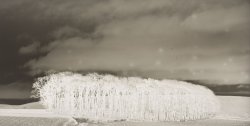
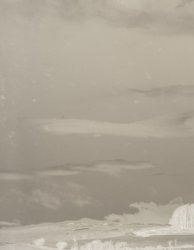
Well, i'm having one persistent issue crop up quite randomly which is ironic. These blotches only ever to appear in the sky i think that may be because that's the only place they would really be noticed perhaps ?

It just appears on a single roll or a single sheet while all others develop fine in the same batch.

I'm 1+1+100, water stop bath and TF-3 fix. Everything always fresh as a daisy. Pre soak is 5 mins.

It's got me flummoxed and cost me some hard days work in the field so i could really do with do with getting a handle on the problem.

Any ideas greatly appreciated.

Thanks,

Simon
 

Attachments

  • Pyro HD-2.jpg
    Pyro HD-2.jpg
    45.3 KB · Views: 21
  • Pyro HD.jpg
    Pyro HD.jpg
    77.2 KB · Views: 19
While I don't use Tri-X that looks like a film issue rather than processing. I've used Pyrocat HD for around 16 or 17 years and never had a problem with a variety of films. Kodak have had recent 120 backing paper issues, so did Foma and Ilford, they all source it from the same company.

There is one other possible explanation and easy to cure, I found that with Pyrocat HD there's a tendency for airbells if you are in a hard water area. Actually I found this happened with just plain tap water as well while I was living in Turkey on the Aegean coast, our apartment is maybe 200 yards from the sea and the tap water comes from a borehole and is undrinkable. I put some water in a Paterson tank with an empty reel and no amount of tapping etc would dislodge the air-bells.

In commercial developers there's usually some adjuncts, sequestering agents & or a trace of surfactant. So I tried adding a couple of drops of wetting agent, that instantly solved the issue. So now when I mix fresh batches of Pyrocat HD I add a small amount of wetting agent to the Part A concentrate and that cures the issue.

The amount of wetting agent is critical as too much will cause foaming and that's equally as bad as air-bells. The way to tes it is, again with just tap water, see how many drops in say a litre you can add before it foams when you shake it and use a touch less.

They use surfactants in film and paper emulsions to aid smooth coatinf, again it's trace levels but I find on longer printing sessions the surfactants build up in the deveoper. Some film emulsions contain more than others.

Ian
 
Hi Ian,

Thanks for the information.

Yes, i've already had a pop at Kodak about this but not surprisingly they blamed everything but the film stock. They even suggested it was probably the bellows !

I'm using de ionised water and processing in a Jobo so i never thought about air bells as i thought the rotary would dislodge them.

I'll look into it now for sure.

Cheers,

Simon
 
Well of course Kodak know best it's your bellows :D They are obviously disintergrating and convieniently shedding round bits on the film :)

As it's round patches of either under-development caused by air-bells or possibly issues with the backing paper 120 (but not 5x4) we need to look elsewhere

There's Jobo's and Jobo's, I've used Jobo 2000 series tanks for around 45 years, however tehy predate the later Rotary tanks and are designed for inversion agitation. Essentially the rotary tanks are similar but need a pre-soak to eliminate issues, I'd suggest that that touch of wetting agent is in the pre-soak and the developer.

Ian
 
When using 2500 series tanks on a CPA2 rotary processor, i regularly tap the bottom of the tank while it rotates to ensure any air bells are released during the pre-wash.

I also lift the tank up off the gear drive to about 20 degrees to try and eliminate linear flow patterns at regular times.

Mike
 
Hi Mike,

Thanks for the tips, i'll try them out and let you know how it went.

Cheers,

Simon
 
It's just possible that you've inadvertently touched the film, but from the pattern, it doesn't look likely. Could it have come into contact with something (I don't know what) while loading?
I have found that using water that has stood for a few days allows dissolved gases to come out of solution and I don't get air bells. I began to do this because I have no running water in the darkroom. (One day perhaps...) If you're using de-ionised water throughout, this seems unlikely too.
The bellows explanation is ridiculous.
Let's imagine some very tiny pinholes each one projecting a very tiny beam of light or imaging circular highlights in the scene. Not entirely impossible. This would produce darker patches on the neg, not lighter ones. That is, unless you've discovered negative photons, in which case, please may I come to your Nobel presentation?
I can't think of any other way that bellows could do this. If they're shedding flakes or dust, that would be clearly visible.
 
Hi,

Someone told me they found that mixing part B in Glycol can result in 'stuff' forming in the solution. They realised this when they encountered issues similar to the images in this post and traced it back to the part b solution.

After checking mine it's the same. Lots of particles and chucks of stuff floating around in there which if they found their way into the developing drum would cause havoc no doubt.

So i'll be discarding my part b and mixing some more in distilled water to see if that cures the foreign objects.

If so then i think that's the problem diagnosed.
 
Is this a Formulary batch of Pyrocat Simon?

I had numerous issues with Pyrocat HD with several batches from Formulary chemicals, including the components not dissolving properly in both A and B.

I ditched all of them and now mix my own......no problems at all. There are a couple of sellers on the auction site that will sell pre-mixed Pyrocat HD (including in glycol), so i'd suggest giving those a try before you abandon Pyrocat.

Mike
 
Hi Mike,

Yes it was from PF and i also bought two more 50litre batches too !

There's obviously a problem with their Pyrocat as too many people are talking of the same issues and then having no issues once they source from elsewhere.

Which is what i'll be doing too from now on.

Cheers,

Simon
 
Back
Top