


- Joined
- Jun 23, 2022
- Messages
- 293
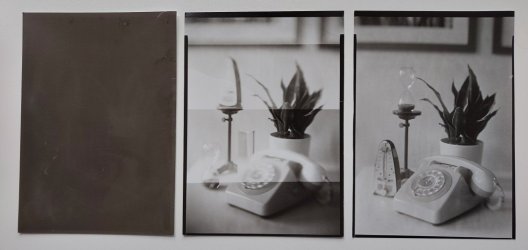
My first three attempts at B&W reversal processing.
5x7" on Kentmere VC.
I'd got it sorted by number 3 (it's a bit brighter in real life)
This process is likely to be useful for me because I have been making studio portraits using Harman Direct Positive paper. DPP is unavailable again right now and it is really picky, expensive stuff when I can get it.
 I began with the Ilford article https://www.ilfordphoto.com/reversal-processing/
Then this work by Dave Walker suggested substituting readily available Sodium Bisulphate for Sulphuric acid https://substack.com/home/post/p-172490949
This means my 'bleach' step is Potassium Permanganate in an acid solution which is, presumably, oxidising and dissolving the developed silver halides from the paper.
Whether I use KMnO4 or 'safer' Hydrogen Peroxide, my used solution must contain dissolved silver salts, in the same way as used fixer. I have not yet found a good explanation of the chemistry involved so I don't know what form these salts are likely to be.
There is also a hypo clear bath after the bleach. I'm using Sodium Sulphite. Perhaps some of the silver ends up here too?
The 'bleach' step is one-shot in all the formulations I have seen, so I'm likely to generate a fair bit of this needing safe disposal. (I neutralised by first batch with the sodium carbonate I had on hand). I don't want to do anything that could release silver into the environment. I manage used fixer safely and now I'm looking for a way to use this reversal process for studio work, without adding to the pollution I generate.
An explanation of the chemistry of the 'bleach' would be useful, please? And then perhaps someone can also suggest a safe, effective way to precipitate the silver out of the solution? Maybe there another way to remove or bind the silver leaving a solution that can be disposed of responsibly in municipal waste water?
Thank you so all the knowledgeable people here who patiently help with my questions. I'm looking forward to using this process for bigger prints soon - just need to have the disposal question properly in hand.
5x7" on Kentmere VC.
I'd got it sorted by number 3 (it's a bit brighter in real life)
This process is likely to be useful for me because I have been making studio portraits using Harman Direct Positive paper. DPP is unavailable again right now and it is really picky, expensive stuff when I can get it.
I began with the Ilford article https://www.ilfordphoto.com/reversal-processing/Then this work by Dave Walker suggested substituting readily available Sodium Bisulphate for Sulphuric acid https://substack.com/home/post/p-172490949
This means my 'bleach' step is Potassium Permanganate in an acid solution which is, presumably, oxidising and dissolving the developed silver halides from the paper.
Whether I use KMnO4 or 'safer' Hydrogen Peroxide, my used solution must contain dissolved silver salts, in the same way as used fixer. I have not yet found a good explanation of the chemistry involved so I don't know what form these salts are likely to be.
There is also a hypo clear bath after the bleach. I'm using Sodium Sulphite. Perhaps some of the silver ends up here too?
The 'bleach' step is one-shot in all the formulations I have seen, so I'm likely to generate a fair bit of this needing safe disposal. (I neutralised by first batch with the sodium carbonate I had on hand). I don't want to do anything that could release silver into the environment. I manage used fixer safely and now I'm looking for a way to use this reversal process for studio work, without adding to the pollution I generate.
An explanation of the chemistry of the 'bleach' would be useful, please? And then perhaps someone can also suggest a safe, effective way to precipitate the silver out of the solution? Maybe there another way to remove or bind the silver leaving a solution that can be disposed of responsibly in municipal waste water?
Thank you so all the knowledgeable people here who patiently help with my questions. I'm looking forward to using this process for bigger prints soon - just need to have the disposal question properly in hand.
Last edited:

