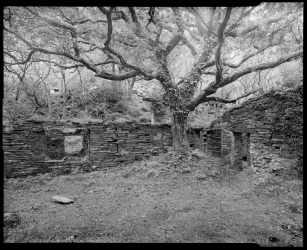
Rewilding of a disused quarry

lensworx

Popular Poster
Registered User
Joined
Jun 5, 2024
Messages
61
Hi all

Took a trip out today to scout a new photography location. Decided to take the cambo with me along with the new lens I recently purchased.
I did not get as many as I would have liked with the cambo due to the somewhat changeable weather conditions but I will be going back again for sure.

I also realised that lugging 4x5 gear along with digital gear is somewhat of a heavy task when yomping up and down these types of locations.
The image is somewhat over exposed due to the sun coming out just at the wrong time (for the first time all bloomin day).
The blooming / Halation I am on the fence about but kind of like the look its giving, thoughts?

Cambo 4x5, Schneider-Kreuznach Super-Angulon 90mm f/5.6
Fomapan 100
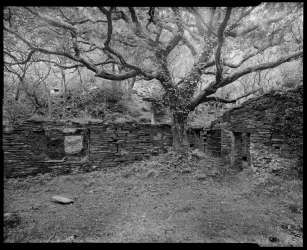
DQScouting1.png
 
Last edited:
A very attractive scene. Might I suggest that the branches hold more visual interest than the foreground so that a little bit of front rise might be useful?
I wasn’t there of course, so I may be mistaken and you wisely decided to cut out the alien spaceship hovering just out of sight above the trees.
 
A very attractive scene. Might I suggest that the branches hold more visual interest than the foreground so that a little bit of front rise might be useful?
I wasn’t there of course, so I may be mistaken and you wisely decided to cut out the alien spaceship hovering just out of sight above the trees.
Looking at it again you are right and something I will remember for next time.
At present I have not done much in regards movements as I am still trying to get used to the camera but I fully agree.

I will crop some of the foreground off for now in the final shot which should things but remember for next time
 
Open it up a little and hut burn in the foreground to even it up, I think you have composition right.

1720198330717.png

I assume you know the R.S. Thomas poem "Welsh Landscape" which starts:

To live in Wales is to be conscious
At dusk of the spilled blood
That went into the making of the wild sky,
Dyeing the immaculate rivers

I find it very evocative, it echoes my feelings when I work there making images.

Before moving to Turkey in 2006 I spent 20 years shooting in North Wales, I had my ritual Easter holiday week, then a week later after the school summer holidays, also leading some workshops there in the 1990s.

Ian
 
Open it up a little and hut burn in the foreground to even it up, I think you have composition right.

View attachment 4841

I assume you know the R.S. Thomas poem "Welsh Landscape" which starts:

To live in Wales is to be conscious
At dusk of the spilled blood
That went into the making of the wild sky,
Dyeing the immaculate rivers

I find it very evocative, it echoes my feelings when I work there making images.

Before moving to Turkey in 2006 I spent 20 years shooting in North Wales, I had my ritual Easter holiday week, then a week later after the school summer holidays, also leading some workshops there in the 1990s.

Ian
Thanks for the reply.

My inital edit in fact had left the treeline a lot more open but I figured it was possibly too much so darkened it slightly.

I must confess I had not heard that, I am not a big reader unless its a technical manual (im sad like that).
Indeed very evocative even more so knowing where this was taken etc...

This was actually shot up that way, not far from Caernarfon. I have had my eye on this and another location for possibly 10 years only got chance to scout it yesterday (I will be going back again for sure).

The FOV of 90mm took me a little by surprise as well if I am honest. everything I had read stated that it was close to 28mm however it seems wider than that for sure (comparing to 24mm on full frame) I have a feeling it could be the different in aspect ratio which threw me off.
 
Last edited:
Hi all

Took a trip out today to scout a new photography location. Decided to take the cambo with me along with the new lens I recently purchased.
I did not get as many as I would have liked with the cambo due to the somewhat changeable weather conditions but I will be going back again for sure.

I also realised that lugging 4x5 gear along with digital gear is somewhat of a heavy task when yomping up and down these types of locations.
The image is somewhat over exposed due to the sun coming out just at the wrong time (for the first time all bloomin day).
The blooming / Halation I am on the fence about but kind of like the look its giving, thoughts?

Cambo 4x5, Schneider-Kreuznach Super-Angulon 90mm f/5.6
Fomapan 100

I very much like this image.

It's hard to know what the tonal balance really is, given the vagaries of monitor calibration and differences in viewing environment, but on two different monitors, this image feels like it would benefit from a slight brightening and slight increase in contrast.

But those are nits. It's a very fine picture.
 
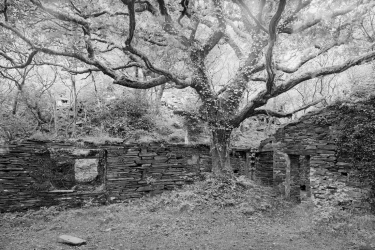
Thanks all for the input and suggestions.

Made a few changes based on what everyone has said / suggested and came up with this.

DQScouting2.png
 
Cropping destroys the context that this was once a large building, for me it loses too much,

Ian
 
Thanks everyone. I am going to put this one on the back burner for a few days I think and possibly revisit it then.
 
Thanks everyone. I am going to put this one on the back burner for a few days I think and possibly revisit it then.

Keep in mind that it takes 100 photographers to make an image. One to do the work, the other 99 to critique and say "I would have done this differently .." ;)

While other points of you as you've seen expressed here can be helpful, in the end, you have to make the image YOU believe in.

I do almost nothing but traditional silver printing. It is expensive, time consuming, and exhausting. For the moment I consider taking the picture to deciding which negative to print, I am asking myself, "Do I care enough about this image to put that much effort into it?"

Your best images will be the one you care about the most. These will be the ones in which you will invest time to elicit from that image that which you care about.

I must go ... prints to pull from the washer, and it's time to dust off the 5x4 today after many months on a nearly 100% Leica 35mm diet.
 
Keep in mind that it takes 100 photographers to make an image. One to do the work, the other 99 to critique and say "I would have done this differently .." ;)

While other points of you as you've seen expressed here can be helpful, in the end, you have to make the image YOU believe in.

I do almost nothing but traditional silver printing. It is expensive, time consuming, and exhausting. For the moment I consider taking the picture to deciding which negative to print, I am asking myself, "Do I care enough about this image to put that much effort into it?"

Your best images will be the one you care about the most. These will be the ones in which you will invest time to elicit from that image that which you care about.

I must go ... prints to pull from the washer, and it's time to dust off the 5x4 today after many months on a nearly 100% Leica 35mm diet.
Oh I know that feeling. I spent enough time around camera clubs for that.
I always have taken critique onboard from those with experience but as you say ultimately its my image.
Having shot a combination of 35mm, 120 and digital over the last 20+ years I have found more and more I am slowing down and taking my time to consider each shot (which is one of the reasons I was drawn to LF).
Being such a perfectionist does not help however and I am normally my own worse critic.

On this scouting trip I took possibly 15-20 shots on the digital camera I had with me however only got the LF camera out once.
Look forward to seeing the 5x4 shots.
 
Your comment about the unexpected field of view of your 90mm lens strikes a chord with me. It may be the different proportions of the 5x4 frame, or something to do with the way we use a large-format camera. Tripod, slower working, a viewing a screen instead of peering through a viewfinder. Could it be that the true “normal” focal length of a 35mm lens is 43mm and that alters our expectations?
I’m not sure, but if anyone has a better explanation, I’d like to hear it.
 
"Normal" lens length has been described as the diagonal distance of the film format. Why, I do not know. I always found this kind of arbitrary.

So, for 35mm film it would be 43mm and for 5×4 about 163mm.

But I don't think that properly considers the human field of view. I find that a 35mm lens on a Nikon or Leica much more closely resembles how I see things, and hence this is my daily driver on the smaller format.

Proportionally, this would be about 132mm or 5 1/4 inch for 5×4.

So, a 90mm lens represents a considerably wider field of view than how we see things.
 
Your comment about the unexpected field of view of your 90mm lens strikes a chord with me. It may be the different proportions of the 5x4 frame, or something to do with the way we use a large-format camera. Tripod, slower working, a viewing a screen instead of peering through a viewfinder. Could it be that the true “normal” focal length of a 35mm lens is 43mm and that alters our expectations?
I’m not sure, but if anyone has a better explanation, I’d like to hear it.
Looking at the images I think the difference is indeed to do with the different proportions / aspect ratios of the different formats. My Digital / 35mm film is all 3:2 ratio
So even 24mm at 3:2 is going to have a slightly narrower FOV in one aspect compared to the 5x4 90mm which if my understanding is correct is more along the lines of 28mm in 35mm terms.

I did notice this to start with when I first got the camera along with the 150mm lens. My understanding is that 150mm was more along the lines of 45-50mm in 35mm terms. However once again 150mm on 4x5 seems wider than what I expected.

This is not an issue but this was the first time I had used the 90mm so was different to what I was expecting that was all.
I just need to train my eye on the different FOV that I get with lenses on 4x5 compared to 35mm
 
Last edited:
Thank you for your calculations.
As well as the different proportions, could there be a subjective effect from viewing one image like a picture on a wall and the other as though peering through the keyhole?
 
Thank you for your calculations.
As well as the different proportions, could there be a subjective effect from viewing one image like a picture on a wall and the other as though peering through the keyhole?
ok so that is an interesting question and more of a technical one which a lot will depend on the camera being used.

So a lot of 35mm film cameras (my Canon Film cameras for example) do not have a 100% viewfinder and more around 97% which means there is the chance that there is a little bit outside of the fov when looking through the viewfinder. some of my older 35mm slrs did however The same can be said for some of the lower tier consumer digital DSLRs that got made in the past. More prosumer / professional 35mm/ dslr's however had a 100% viewfinders so should give the full view of the lens.

On digital at least you can get around this for landscapes etc... by using liveview, this normally has a 100% view and is more like looking at a very small ground glass but with exposure and focus able to be done in real time.

This is indeed my method of working even with my EOS R Mirrorless when shooting landscapes. I will normally initially look through the viewfinder but 90% of my work done on a tripod will be done composing and focusing using the live view screen unless the light is as such that seeing the screen is not able to be done easily. More so if down low as the screen will articulate and allow for easier viewing than spending 10 minutes on my knees.
 
Thank you for your calculations.
As well as the different proportions, could there be a subjective effect from viewing one image like a picture on a wall and the other as though peering through the keyhole?

Perhaps. Certainly the aspect ratio of a rectangular image surface - viewed, projected, peered upon - is quite different than the full circle we see as humans.

But even so, I've always found the "normal" lenses to be too long - and I am not alone. A great many shooters favor the somewhat wider view of a 35mm lens on a 35mm camera and a 90-100mm on a 5x4.

When I shoot 35mm I often reach for a 21mm lens which I find to be aesthetically powerful, especially when one moves up on the subject.

Similarly, I have 72mm and 65mm Super Angulons at my disposal for 5x4 shooting for much the same reason ... though my field camera is hard to hand hold ;)
 
Last edited:
Perhaps. Certainly the aspect ratio of a rectangular image surface - viewed, projected, peered upon - is quite different than the full circle we see as humans.

But even so, I've always found the "normal" lenses to be too long - and I am not alone. A great many shooter favor the somewhat wider view of a 35mm lens on a 35mm camera and a 90-100mm on a 5x5.
I would tend to agree with that. The main lens I tend to use on 35mm / digital is a 17-40.
I do have a number of shots taken a longer focal lengths but they are far fewer for sure

On the flipside however for portraits I always favour a longer focal length (85,90 or 135) on 35mm
 
I think there's a stage where you find it intuitive to compose work with various different formats. I don't crop, well there may be the odd rare crop usually apparent at the taking stage, and I compose tight to the format.

In my case, the main formats I currently shoot are 6x6 with TLRs, and 5x4 & 10x8, as well as 6x17. In the past I've used a 6x9 roll film back, and also 35mm. It's the same with choice of focal length, you build up inherent experience and decisions become subconscious.

Although I'd begun using 5x4 for work from 1977 my camera was a heavy Whole plate De Vere monorail with half plate & 5x4 backs, and it wasn't until 1987 when I bought my Wista 45DX, that I began shooting 5x4 for personal work. I found the discipline of shooting LF with a limited capacity in terms of exposures in a session depending on how many DDS you carried, was a real game changer. Suddenly you had to make each sheet of film count.

I found the discipline of shooting LF made me far more careful with 35mm & MF as well, although I stopped shooting 35mm around 2007 and began using a Yashicamat 124 instead. I'd found for exhibitions 35mm prints don't really work alongside LF prints.

So I shoot to the format, I've decided on the core central subject, then choose my corner/edge framing,

Ian
 
Ian is right about acquiring a feel for different focal lengths. I have found that this works in the short term too. Whatever focal length is right for the first exposure seems to “tune” my eye and I subsequently look for images that fit it.
It might just be laziness. Finding the lens caps, removing and storing the filters, being careful not to drop the cable release and packing the lens back into the bag, then unwrapping the next one and doing everything in reverse can sometimes seem like too much trouble.
I did once meet a photographer who folded the camera and packed everything away between shots.
 
Back
Top