- Joined
- Aug 29, 2020
- Messages
- 1,368

Follow along with the video below to see how to install our site as a web app on your home screen.

Note: This feature currently requires accessing the site using the built-in Safari browser.

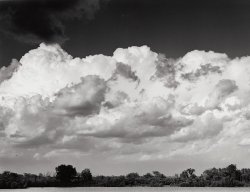
I don’t agree with that. On my iPad and laptop there is full detail in all the trees on the shoreline apart from the largest tree just left of centre.Most of the trees on the far side of the lake are full black.
Which speaks to the difference in display calibration, I thinkI don’t agree with that. On my iPad and laptop there is full detail in all the trees on the shoreline apart from the largest tree just left of centre.

Hi Bill. Thronobulax has said that although there were details in the shadows in the negative, he chose to print these down. So if you are seeing full detail in the trees, maybe your monitor needs adjusting. This is confusing, I know. He has gone to great lengths to describe how his long and elaborate film development process delivers full film speed- and by implication, full shadow detail. Then to illustrate this he chooses to show us a photograph that is deliberately printed to get rid of that shadow detail.I don’t agree with that. On my iPad and laptop there is full detail in all the trees on the shoreline apart from the largest tree just left of centre.


But the image was presented on its own merits, not part of the discussion of how I develop.Hi Bill. Thronobulax has said that although there were details in the shadows in the negative, he chose to print these down. So if you are seeing full detail in the trees, maybe your monitor needs adjusting. This is confusing, I know. He has gone to great lengths to describe how his long and elaborate film development process delivers full film speed- and by implication, full shadow detail. Then to illustrate this he chooses to show us a photograph that is deliberately printed to get rid of that shadow detail.
To be honest, I am beginning to lose interest in all this. His writes very well, but his photographs don't quite get there....
What on earth is "normal tonality". Artists express themselves. There is no normal, there is just the expression.The OP refers to David Kachel, it's important to view some of his images. They don't have normal tonality.
Ian
The history of all art, let alone photography, leaves a much wider range of interpretation available. By your definitions, the work of Brassai, Man Ray, Atget, Minor White, Salgato, Lange, the Westons, and, yes, even some of St. Ansel's output would not be "normal". I daresay all of the above are far better artists than anyone here present.Normal is of course open to interpretation, but encompasses images with a wider or fuller range of tones than the examples being discussed here with a deliberately limited shadow and mid tones.. Or as put above, "soot-and-whitewash"
Ian
The history of all art, let alone photography, leaves a much wider range of interpretation available. By your definitions, the work of Brassai, Man Ray, Atget, Minor White, Salgato, Lange, the Westons, and, yes, even some of St. Ansel's output would not be "normal". I daresay all of the above are far better artists than anyone here present.
This "all zones should be there in some degree" is the disease of people taking the technique of Zone System so literally that they think it's a method for artistic expression. It isn't. It's a way to design and control negatives which then can be mapped onto an output medium in the artist's preferred way. This "all zones must be present theory" is responsible for some of the most unimaginably boring imagery to be found in our craft. It's also responsible some wonderful imagery. What is it not - now, nor has it ever been - is a definitive statement of "normal".
I say all this having passed through that disease myself at an earlier stage of my photographic development. Every print was built attempting to render every possible range of light available. I look back at those prints and now see them for what they really were: Exercises in technique building.
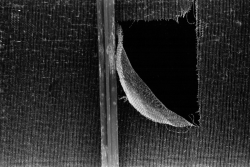
we’ve all seen broken mesh. Lee Miller made an extraordinary image of it.