- Joined
- Aug 29, 2020
- Messages
- 1,394
First a bit of backstory (I've mentioned this before in other threads). Many years ago, the local camera shop also served as the place you went to have your film developed and printed. I am told that it was the practice of at least some of these to hang the film in a tank of D-23, agitate it a bit, do so again at closing time, and let it sit there overnight. This effectively was a very long form of Semistand processing. My guess- and that's all it is - is that they did this because doing so would give them shadow development to completion and protect the highlights without having to worry too much about temperature or type of film. Keep in mind, this was done in large volume for their consumer customers, long before automated development machines came along.
Since the internet is full of people who are all "experts", I learned long ago the only way to validate these kinds of claims was to ... you know ... go try them myself. I've also wanted to try out D-23 at higher dilutions than 1:1 to see what happens when you really cut down on the solvent effect of the developer.
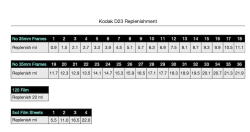
Last night, I mixed up a fresh batch of D-23 1:1 to replenish my working bottle. (See P.S. below.)
Well, that left me with a litre or so of old D-23 1:1. "So," sez me, "Let's do a two variabled experiment. I'll further dilute the developer to 1:3 and do the overnight thing." And that's just what I did.
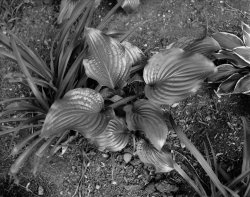
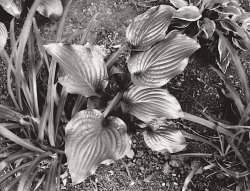
I shot a couple of sheets of Fomapan 200 5x4 at full box ASA, prewet them for 3 min, agitated continuously for 2 min in D-23 1:3, and let them sit for a couple of hours. Then I gave them 30 seconds of further agitation time. This morning I pulled them out for stop/fix/wash. Total development time was 16 hours.
I have no scans to share just yet, but I have a few observations:
Next up in my pending experiments pile: What happens when you develop in dilute DK-50 beyond the recommended 1:1. Just mixed up a batch of THAT today.
P.S. I am currently experimenting with only changing out 1/2 of the working bottle of D-23, thereby leaving a mixture of residual developer byproducts from the half of the working bottle that is old developer. Here again, there are apocryphal tales of this process leading to magically improved negatives. So ... doing the experiment is mandated.
Since the internet is full of people who are all "experts", I learned long ago the only way to validate these kinds of claims was to ... you know ... go try them myself. I've also wanted to try out D-23 at higher dilutions than 1:1 to see what happens when you really cut down on the solvent effect of the developer.
Last night, I mixed up a fresh batch of D-23 1:1 to replenish my working bottle. (See P.S. below.)
Well, that left me with a litre or so of old D-23 1:1. "So," sez me, "Let's do a two variabled experiment. I'll further dilute the developer to 1:3 and do the overnight thing." And that's just what I did.
I shot a couple of sheets of Fomapan 200 5x4 at full box ASA, prewet them for 3 min, agitated continuously for 2 min in D-23 1:3, and let them sit for a couple of hours. Then I gave them 30 seconds of further agitation time. This morning I pulled them out for stop/fix/wash. Total development time was 16 hours.
I have no scans to share just yet, but I have a few observations:
- Looking through the negs, they look very clean. No sign of bromide drag or other nasty artefacts.
- The negs DO look different though. The negative seems somewhat more dense than what I see with 60min Semistand. Looking through the neg appears normal, however. The emulsion seems much more obviously matte surfaced than a normally developed Fomapan 200 neg does.
- Interestingly. the unexposed borders of the negative look like they are slightly fogged, but upon closer inspection it almost looks like there has been a silver migration to the edges.
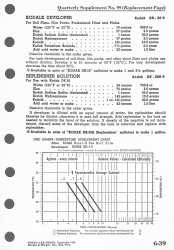
Next up in my pending experiments pile: What happens when you develop in dilute DK-50 beyond the recommended 1:1. Just mixed up a batch of THAT today.
P.S. I am currently experimenting with only changing out 1/2 of the working bottle of D-23, thereby leaving a mixture of residual developer byproducts from the half of the working bottle that is old developer. Here again, there are apocryphal tales of this process leading to magically improved negatives. So ... doing the experiment is mandated.
Last edited: