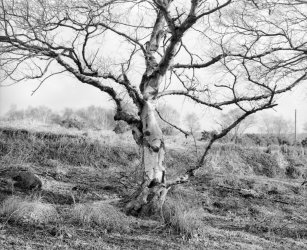
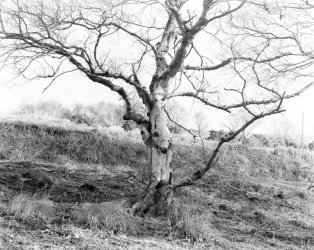
Well, let me stick my head in the hornet's nest and mentioned the D word.
I started using LF (5x4) around 2005 and, until the end of 2021, I would still consider it for some larger or high resolution prints.
But then, I bought a Nikon D850 and, slowly started to realise, for the majority of my work, that I really didn't need the LF anymore.
If I set the D850 to 5x4 crop ratio, I get an image size on the sensor, in pixels, of 6880 x 5504. Now, print that at 240ppi, which is more than adequate, and I get a physical print size of just under 29" x 23". Now, A1 paper measures 33.1" x 23.4", which means, with a crop to 5x4 proportions, I can, near as darn it, get an uninterpolated 30" x 24" print without even breaking into a sweat.
Now, I also use Topaz software for upscaling and can happily double that and more. So, I am now at the point that without having to resort to the LF camera, I can easily produce 60" x 48" prints that are indiscernible from an image taken on 5" x 4" and scanned at 2400ppi. In fact, such a scanned image is smaller at only 50" x 40".
On our walls, we have prints from both film scans from the Ebony and digital images from the D850 - all Lambda printed either by Harman in the UK or Picto in Paris. So, these are all printed on silver halide paper and, resolution-wise, there is no way anyone we have shown them to can tell the difference. We use a Canon Pro-1000 A2 printer most of the time, mainly because we are running out of room on the walls for anything larger.
Of course, it is a waste of time posting them here for comparison as there isn't enough room on the screen to properly show any likely difference in 5ft x 4ft prints.
The only thing I really miss about the Ebony is that shiver down my spine when I'm handling it and the lack of movements with the D850. Although, I'm still contemplating, either a back adapter to put the D850 on the Ebony or a tilt-shift adapter for the D850.
Martin, you ask whether "4x5 was worth the effort". Well, that's very much a double edged sword of a question. Getting a high resolution digital image to the same size and resolution, look and feel, as a 5"x4" sheet of film nowadays, is easy-peasy as long as you have learned the tips and tricks necessary to get it there.
To my mind, neither one is "easier" than the other, it's just that the knowledge and skills are different.
I have deliberately avoided the thought of darkroom printing as that is a whole other set of skills and it is far harder to get the same type of renderings, dodging and burning, etc, than it is with modern software. Not forgetting that software like DxO FilmPack can reproduce the emulsion and grain of a given film fairly reliably.