Is 4x5 worth the effort

martin henson

Very Active Poster
Registered User
Joined
Aug 6, 2016
Messages
664
The other day I was listening to a former professional photographer. He argued that there’s no point in bothering with 4 × 5 format, stick with medium format instead. The marginal gain in quality isn’t worth the hassle of lugging a bulky folding camera, lenses, film holders, and a tripod. You can pick up a medium‑format system for about the price of a single 4 × 5 lens. I’d love to hear what you think about his take on this
 
I've been shooting 5x4 since around 1977, although to start with for applied use & studio work. I used MF and 35mm for other work.

However, when I began shooting more serious personal work around 1986/7 that was initially mostly MF and a little 35mm. I realised quite quickly for many images I needed movements, usually front tilt, as DOF was often insufficient to cope. My MF cameras at the time were Mamiya 645s.

I looked at various options, cost wise buying a Wista 45DX was no more expensive than buying a 6x7 or 6x8/9 camera with front tilt, and the same with lenses, In addition the Wista, while slightly larger, is lighter.

In hindsight, I made the right decision, using LF introduces a discipline, allowing great flexibility. I have also shot 5x4 hand held, with movements when needed.

There is a noticeable quality difference between MF and 5x4, but that really only starts to become apparent when you enlarge past about 12"x10".

Ian
 
By implication, a "professional photographer" earns his living from photography and (as in most walks of life), time is money, so the speed of setup and (arguably) "marginal gains" in quality mean it's not worth it for him.

I can't speak for everyone, but I suspect the majority of us do it for the love of the experience as well as the results. In my case, I use large, medium and small format cameras for the love of it.

Getting out into the landscape to experience the sights and smells are what drives me to grab a camera.

As a man of a certain age and background, i'm in a fortunate position now where i have wealth of equipment in the formats i've chosen that i could never have dreamed of when i was young.

It allows me (and sometimes distracts me) to choose how/what i shoot, but at the end of the day, when time, weather and inspiration conspire, the first bag i'll grab is the LF bag.

Mike
 
The other day I was listening to a former professional photographer. He argued that there’s no point in bothering with 4 × 5 format, stick with medium format instead. The marginal gain in quality isn’t worth the hassle of lugging a bulky folding camera, lenses, film holders, and a tripod. You can pick up a medium‑format system for about the price of a single 4 × 5 lens. I’d love to hear what you think about his take on this

He was wrong.

A moderately lightweight 5x4" setup barely weighs any more than, say, an equivalent hasselblad or mamiya 67 kit, not least because you're always tempted to carry extra backs and lenses with medium format. Large format is infinitely more capable (tilt with every lens more than pays for itself in terms of landscape work for instance), and in quality gain is more than evident, especially if you need deep front-to-back depth of field. I was always limited with medium format, I would forever be at the lens's smallest f-stop and still having to compromise compositions to avoid foregrounds too close to the camera. For context I have owned and used a Mamiya 645 system (prior to moving to 5x4"), then later a Hasselblad system (including SWC), a Rollie SL66, Rollei TLRs, Mamiya 7 system etc etc. Large format knocks them all into a cocked hat for anything tripod-based. Moving to large format was by far the single best decision I made for my photography. I love an Rollei TLR for handheld stuff but that's a different issue.

As for;
You can pick up a medium‑format system for about the price of a single 4 × 5 lens
This isn't really true. OK you can find LF lenses which are very expensive, but for the most part the majority of run-of-the-mill superb pro-level LF lenses (Symmar-S, Super Angulons etc) are coming in the £150-500 range depending on age and condition, and you can't put together any sort of medium format system for anything like that money except for perhaps a beat-up older model Mamiya 645 or the Bronica equivalent. Hasselblads in particular have doubled in price over the last 15 years, as has Mamiya 6x7 gear and Pentax too. You do see Fuji GX680 systems going quite cheap but these aren't practical for anything outside a studio.
 
I am not a professional but just love the large format setup, like the posts above, I started in film in the late 60's. I shot weddings on Medium format in the 80's and 90's, but always wated to try LF but never had the time or money. Since retiring I have 5 LF camera's.
It slow's you down with the process and you put more in to taking every shot.
 
I am not a professional but just love the large format setup, like the posts above, I started in film in the late 60's. I shot weddings on Medium format in the 80's and 90's, but always wated to try LF but never had the time or money. Since retiring I have 5 LF camera's.
It slow's you down with the process and you put more in to taking every shot.

I hope you not suggesting that people who shoot medium format rush and put in less effort !!!!
 
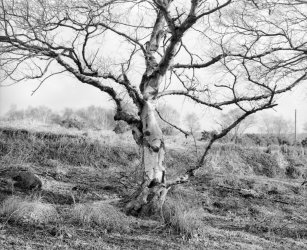
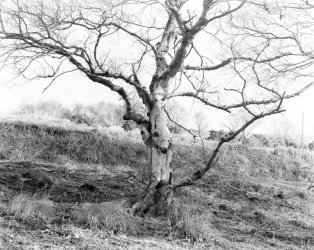
One of these was taken with a Mamiya RB67 and 127mm lens. The other was taken with a 5x4 Shen Hao and 210mm Apo Symmar. HP5 film was used for both. Would anyone like to say which is which?
1.jpg2.jpg
 
Hi Martin. Its not easy with large prints either. I scanned both of these negatives on a V700 flatbed scanner, and made A3 plus digital prints at about 18 inches wide, with no added USM. And you can't see any difference in sharpness. And this isn't a one-of. On the same day I photographed two other subjects, on 6x7 and 5x4, and there are no differences, tonal or in sharpness, between these either.

You say the top one is 5x4. Would anyone else care to stick their neck out?
 
One of these was taken with a Mamiya RB67 and 127mm lens. The other was taken with a 5x4 Shen Hao and 210mm Apo Symmar. HP5 film was used for both. Would anyone like to say which is which?
No. Because the images are reproduced as digital representation. Also they don't appear to have been exposed or developed identically, or if they were, then they do not seem to have been presented on this page identically. I see the background trees in the top version are rendered more clearly than in the second version which looks rather over exposed. Mamiya lens are super sharp, the best I have ever used, but assuming the lenses are of a comparative quality then in my opinion, the greater film area of the 5X4 negative should always give a better everything if processed and printed identically to the 6x7.
 
Hi Martin. Its not easy with large prints either. I scanned both of these negatives on a V700 flatbed scanner, and made A3 plus digital prints at about 18 inches wide, with no added USM. And you can't see any difference in sharpness. And this isn't a one-of. On the same day I photographed two other subjects, on 6x7 and 5x4, and there are no differences, tonal or in sharpness, between these either.

You say the top one is 5x4. Would anyone else care to stick their neck out?

Digital printers Interpolate, that means a smaller file can print way better than you might first expect.

Ian
 
Well, let me stick my head in the hornet's nest and mentioned the D word.

I started using LF (5x4) around 2005 and, until the end of 2021, I would still consider it for some larger or high resolution prints.

But then, I bought a Nikon D850 and, slowly started to realise, for the majority of my work, that I really didn't need the LF anymore.

If I set the D850 to 5x4 crop ratio, I get an image size on the sensor, in pixels, of 6880 x 5504. Now, print that at 240ppi, which is more than adequate, and I get a physical print size of just under 29" x 23". Now, A1 paper measures 33.1" x 23.4", which means, with a crop to 5x4 proportions, I can, near as darn it, get an uninterpolated 30" x 24" print without even breaking into a sweat.

Now, I also use Topaz software for upscaling and can happily double that and more. So, I am now at the point that without having to resort to the LF camera, I can easily produce 60" x 48" prints that are indiscernible from an image taken on 5" x 4" and scanned at 2400ppi. In fact, such a scanned image is smaller at only 50" x 40".

On our walls, we have prints from both film scans from the Ebony and digital images from the D850 - all Lambda printed either by Harman in the UK or Picto in Paris. So, these are all printed on silver halide paper and, resolution-wise, there is no way anyone we have shown them to can tell the difference. We use a Canon Pro-1000 A2 printer most of the time, mainly because we are running out of room on the walls for anything larger.

Of course, it is a waste of time posting them here for comparison as there isn't enough room on the screen to properly show any likely difference in 5ft x 4ft prints.

The only thing I really miss about the Ebony is that shiver down my spine when I'm handling it and the lack of movements with the D850. Although, I'm still contemplating, either a back adapter to put the D850 on the Ebony or a tilt-shift adapter for the D850.

Martin, you ask whether "4x5 was worth the effort". Well, that's very much a double edged sword of a question. Getting a high resolution digital image to the same size and resolution, look and feel, as a 5"x4" sheet of film nowadays, is easy-peasy as long as you have learned the tips and tricks necessary to get it there.

To my mind, neither one is "easier" than the other, it's just that the knowledge and skills are different.

I have deliberately avoided the thought of darkroom printing as that is a whole other set of skills and it is far harder to get the same type of renderings, dodging and burning, etc, than it is with modern software. Not forgetting that software like DxO FilmPack can reproduce the emulsion and grain of a given film fairly reliably.
 
Last edited:
Alan and Helen, the differences you point out are because the light changed - it was sunny with moving clouds. I wasn't worried about this as I wasn't trying to end up with two prints that looked the same. I was looking for differences. The light level stayed the same, so the basic exposure stayed the same. I was concentrating and focussing on the tree trunk, as the idea was to see if there would be any difference in tonality and sharpness between 6 x 7 and 5 x 4. Both were exposed at f22 for 1/4 sec. And both were developed in ID11 at 1:2 for 14 minutes.
Helen, you say the mamiya lens is very sharp. It is, but it doesn't have that harsh sharp look that you see with some lenses. It actually has a lovely open quality to it that is quite special.
 
Digital printers Interpolate, that means a smaller file can print way better than you might first expect.

Ian
Digital printers Interpolate, that means a smaller file can print way better than you might first expect.

Ian
Ian, I have used negatives from my RB67/ 127mm lens to make 16 x 20 darkroom prints that have excellent sharpness and tonality. I was surprised by how good they were.
 
Hi Martin. Its not easy with large prints either. I scanned both of these negatives on a V700 flatbed scanner, and made A3 plus digital prints at about 18 inches wide, with no added USM. And you can't see any difference in sharpness. And this isn't a one-of. On the same day I photographed two other subjects, on 6x7 and 5x4, and there are no differences, tonal or in sharpness, between these either.

You say the top one is 5x4. Would anyone else care to stick their neck out?
A3 is hardly a stretch for either 67 or 5x4" though. Go bigger and film grain will become apparent, assuming the scans are good and everything else is optimal.

As for digital, yawn, nobody asked.
 
5x4 is worth the effort, it's all about the experience, if it was for a business we'd all be shooting we'd be shooting digital.
 
A3 is hardly a stretch for either 67 or 5x4" though. Go bigger and film grain will become apparent, assuming the scans are good and everything else is optimal.

As for digital, yawn, nobody asked.
They weren't A3. They were 19 inches wide...That's plenty big enough for me.
Jonathan Hotopf has seen these prints, and he couldn't see any difference between 6 x 7 and 5 x 4.
 
The other day I was listening to a former professional photographer. He argued that there’s no point in bothering with 4 × 5 format, stick with medium format instead. The marginal gain in quality isn’t worth the hassle of lugging a bulky folding camera, lenses, film holders, and a tripod. You can pick up a medium‑format system for about the price of a single 4 × 5 lens. I’d love to hear what you think about his take on this
Hello Martin,

Great question. I'll keep my answer brief... For some people it's all about the destination, the final result and how to get there the fastest and easiest method possible. For others like myself it's all about the journey and the experience along the way. I'm happy to drag around my 12x10 ULF camera on a sack truck and expose long expired glass plates or paper negs because it's challenging, a lot of people would have no interest at all.
 
If I set the D850 to 5x4 crop ratio, I get an image size on the sensor, in pixels, of 6880 x 5504. Now, print that at 240ppi, which is more than adequate, and I get a physical print size of just under 29" x 23". Now, A1 paper measures 33.1" x 23.4", which means, with a crop to 5x4 proportions, I can, near as darn it, get an uninterpolated 30" x 24" print without even breaking into a sweat.

All Printer drivers and RIP software interpolate, you are talking about quite minimal interpolation when file resolution is well optimised to the final printer output. We can't avoid Interpolation, as that is part of the conversion of Pixels.PPI to DPI.

It's semantics, I was having A0 and A1 prints made from a 6mb camera over 20 years ago, print size is also related to viewing distance.

Ian
 
Back
Top