- Joined
- Aug 29, 2020
- Messages
- 1,394
is visable focal point will give a perfect measurement of the entrance pupil.
I am aware about the logical f/stop system, and to all of us should be clear that an f/8 will give the same amount of passing light to every lens .
But as said before I can't imagine "f/8 on a 150mm lens will be half the size as f/8 on a 300mm lens" ,
because an f/stop term tells about the amount of light instead of the size of aperture diameters so I believe.
Perhaps this is where the problem arises in coming to a common understanding. The following statements are both true (for most ordinary lenses and exceptions do exist as other like @Ian Grant have noted):
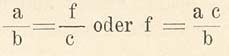
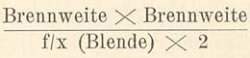
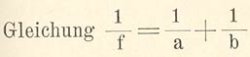
1. An "f/stop" is by definition a ratio of focal length to diameter to aperture. If I have an 800mm lens and set it on f/8, the aperture diameter is 800/8=100mm. That's why the proper notation for this idea is f/stop not f-stop. It's intentionally a notation of ratio. And ... that's why f/8 on a 300mm lens will have twice the diameter of f/8 on a 150mm lens of ordinary design.
2. A given (ordinary lens) will transmit the same amount of light at a given f/stop even though the actual size of the opening will be larger for a longer lens. From https://en.wikipedia.org/wiki/F-number:
A 200 mm focal length f/4 lens has an entrance pupil diameter of 50 mm. The 200 mm lens's entrance pupil has four times the area of the 100 mm f/4 lens's entrance pupil, and thus collects four times as much light from each object in the lens's field of view. But compared to the 100 mm lens, the 200 mm lens projects an image of each object twice as high and twice as wide, covering four times the area, and so both lenses produce the same illuminance at the focal plane when imaging a scene of a given luminance.