Do You Scan & Print or Darkroom Print

I printed colour for my personal work, again in the 1980s/1990s, but it was costly and really time consuming - at a time where I never seemed to have enough time. I would spend an eternity trying to remove colour casts, only to find my final print had a colour cast! All my professional work was printed through the lab - Joe's Basement - remember them? (London) I even tried Cibachrome printing of transparency stock. Now, I love printing through an inkjet printer in the daylight. My prints are for my own personal use and they compare favourably against my wet processed colour prints.
(Joe's Basement was a London based processing lab - Wardour St or Dean St - can't quite remember).
I came to my senses and used Joe's Basement for prints - and then John Mc C (near Oxford Circus) John and his Daughter Holly were fab people, and I used to trust them implicitly
 
A Lambda printer is a giant of a machine which most people would not be able to find room for in a domestic setting. It takes 50" wide roll paper and uses its lasers to expose silver halide paper, which is then passed through a conventional wet process development and fixing. You would need, at least, a double garage to house it.

All of which is why there are only a few labs that offer this service, usually by asking clients to upload their files and returning the prints in a tube.


I think you have misunderstood what Lambda printing involves and costs. From Harman, a 20" x 24" print only costs around £30. See their site for more details https://www.harmanlab.com/page/86/NEW-B-W-PRINTING-SERVICES.htm


Don't forget that we are not necessarily talking about a digital capture, it's the process of getting a print from a negative or transparency.

There is every bit as much an art form in carefully crafting a digital scan into a file that will be Lambda printed on silver halide paper as there is in producing a darkroom print on silver halide paper through an enlarger or contact print.

In the darkroom you use multigrade paper and filters, test strips and create a printing plan and dodge and burn with paddles to achieve an optimal print. On a computer, I use a calibrated screen and software to dodge and burn areas of the image in exactly the same way to create a perfect file that will then be printed.

Ian and Martin have provided all sorts of tutorials on what they refer to as "contrast grading" but is, in fact, dodging and burning.


Indeed. I have done darkroom printing - I needed to create a darkroom, either temporary or permanent, and spend hours and, more importantly, a lot of money producing test strips, printing plans and trial prints in order to get something that approached what I wanted. Now, I waste the same time but nowhere near as much money, as I am able to create a perfectly worked image for only the cost of the electricity to run the computer. Then it's a case of pressing "print" for a digital print, or sending the file to Harman for a silver print, knowing that, most of the time, that is the only time I will have to spend out on printing.

Of course, another advantage of the hybrid approach is that I don't have to go through the entire multiple exposure process that dodging and burning from a printing plan involves, all over again for every print.

Is digital printing of scans an art form? Well, if you consider that some B&W prints I have prepared have taken 3 or more days to work on, adjusting, assessing, leaving overnight for consideration and reflection, reworking, etc., it's certainly nowhere near an instant process and, as Ian, Martin and others here will testify, it's far from the everyday simple process that calling it "just digital" would infer.


Thanks for this thoughtful response. I fully expect to move to computerized output at some point when my old carcass can't stand in the darkroom for 6 hours at a time ;) And now I'm even more interested in the Lambda process. It would seem that it is, in fact, effectively a form of silver printing but the manipulations are done digitally first.
 
(Christopher James' Alternative Photographic Processes. ISBN-13: 978-1-4180-7372-5)...) but there has been an updated 'issue' since this first graced my bookshelf. (2nd edition has some 600 pages of great reading).

Many practitioners have come to regard this book as "THE" book if you decide to enter into the foray... and have to admit that I have to agree with their recommendation. This book has allowed me to enjoy and explore and greatly expand my photographic 'print' options using that portion of the light spectrum without direct sunlight. While these processes are MUCH slower than current silver-gelatin print emulsions, I feel the time, effort and results are still well worth the investment.

Ken

I invested in the latest edition of this last year - a magnificent book, I have yet to explore the wealth of information it contains.
 
I'm ashamed to admit that I've never set foot inside a darkroom! It's something I'd love to experience, but practically it's not something I could commit to as there's no space to build a darkroom at home. There's a darkroom available to use in Inverness which I may try at some point, but I don't think they offer any tuition at the moment which would be vital.

My normal process was lab processed film scanned on a V700, clean and minimal edit in Photoshop (CS5) and then upload for printing at a lab, however that was about 10 years ago and I've just got myself a Canon Pro9500 mkII to dabble with printing at home, but it's a steep learning curve. Thankfully I managed to get a load of Canon ink at a very low price so I can afford plenty of mistakes / learning experiences without financial stress. I'm also processing my black and white at home now, and hope to start on colour at some point.
 
It’s always been the darkroom for me. I guess it’s what I know .
The darkroom completes the whole “hands on process” - plus I hate (yes abhor) all thinks associated with scanning.
I recently started colour RA4 printing and I get wayyyyy better images than I ever did digitally.

but hey - horses for courses and for many a darkroom isn’t an option so I get it.
 
From reading this thread, it does seem that we have reached a break-even point where either process, in the right hands of course, can produce excellent results. Personal preferences remain, as everywhere else.
Some like brown sauce on their bacon sandwich, some like red and some of us prefer not to contaminate the joy of bacon.
 
The darkroom completes the whole “hands on process” - plus I hate (yes abhor) all thinks associated with scanning.

What we have to appreciate is that not everyone has the finances or room to kit a darkroom out these days.
My darkroom which is 6 feet long and 3 feet wide is tucked away in the corner of the loft in a 2 bedroom house.

darkroom.jpg

Despite my passion for it and I have attended a few workshops with Andrew Sanderson, I will never become a master printer because I am just so hampered for space but I spend many hours in there just messing and learning and enjoy the process even though there is very little end result in terms of a print I would hang on a wall.

So what keeps film alive for me is the ability to move over to the hybrid workflow, one which allows me to still enjoy the process of making exposures on film, developing the film and then scanning the film to make the final end result.

I have spend over a decade learning the craft of scanning black and white and I see my skill set in this area no less than a seasoned darkroom printer. Both require skills, dedication and hard work to reach an end goal.

@David M more or less hit the nail on the head.
Some like brown sauce on their bacon sandwich, some like red and some of us prefer not to contaminate the joy of bacon.
 
What we have to appreciate is that not everyone has the finances or room to kit a darkroom out these days.
My darkroom which is 6 feet long and 3 feet wide is tucked away in the corner of the loft in a 2 bedroom house.

View attachment 3134

Despite my passion for it and I have attended a few workshops with Andrew Sanderson, I will never become a master printer because I am just so hampered for space but I spend many hours in there just messing and learning and enjoy the process even though there is very little end result in terms of a print I would hang on a wall.

So what keeps film alive for me is the ability to move over to the hybrid workflow, one which allows me to still enjoy the process of making exposures on film, developing the film and then scanning the film to make the final end result.

I have spend over a decade learning the craft of scanning black and white and I see my skill set in this area no less than a seasoned darkroom printer. Both require skills, dedication and hard work to reach an end goal.

@David M more or less hit the nail on the head.
This is exactly it. I live in a city flat with no garden for a shed, and no loft ... and in this I'm most definitely not alone these days!

I believe we need more local community darkrooms available at reasonable prices!
 
I believe we need more local community darkrooms available at reasonable prices!

Our local college here in Doncaster still teaches darkroom work and they have a nice darkroom all kitted out.
I have approached the local council on more than one occasion about this very thing and it just seems to fall on deaf ears
 
Perhaps an unofficial pint with whoever actually holds the darkroom key? Or could you volunteer to give brief talks to the students as a way in? I'm pretty sure you could pass on some interesting and useful information. I'd stop short of actual burglary. (Unless you are a retired burglar, of course.)
Very elegant safelighting and a very neat use of space.
I used to work in my roof space. Uninhabitable in daylight in summer. Too cold in winter, but I used one of those travelling mug heaters to warm the developer between each print. Too low to stand so I had to kneel reverently before the enlarger. Happy days...
 
Can I just move the subject back to digital printing?

I used to use an Epson SC-P600 printer, with Fotospeed's excellent refillable cartridges, which meant I could buy a 125ml bottle of ink for the same price as an Epson cartridge.

Unfortunately, possibly because I don't use it all the time, it has cost me to replace it twice when air managed to get into one of the tubes and couldn't be removed without stripping down the entire printer.

This last time, I was in the middle of printing an exhibition for our club photo and had to get one delivered pronto. But, this time, I yielded to the temptation to move up to an A2 printer.

Realising I was no longer going to be able to use refillable cartridges, I looked at Epson's SC-P900 but, having previously read about Epson having had problems when it and its smaller sister were released; and comments that it was a bit "cheap and plasticky", I opted for the Canon imagePROGRAF PRO-1000.

Fully expecting to have to go through extensive calibration before getting anything reasonable (that matched the screen) I thought I would try a print, totally uncalibrated. I was amazed to find that using Canon's B&W mode (equivalent to Epson's ABW), I got perfectly acceptable prints on both Fotospeed PF Luster 275 and Canon Baryta Photographique.

Canon provides its own print layout software, which is pretty comprehensive, although somewhat complicated to get to grips with and, now, I have created a few optimised presets with very little adjustment, for each of my paper sizes and types.

One thing I seriously love about the Canon ink set is what Canon call its Chroma Optimiser cartridge, which basically "fills in" any white areas, that would normally receive no ink, with a clear "ink", so you don't get the annoying difference in texture when viewing the print from an angle.

We recently printed an A2 of one of Helen's images that she took as a tribute to Ansel Adams' Moonrise over Hernandez, with a silky black sky and an immaculately detailed moon, as well as bright distant houses. It must be good - we keep on picking it up and going wow! Holding it up against one of our Ilford Lambda prints, apart from being smaller, we can't see anything lacking in quality.

Since it looks like future printers, of any make, are very unlikely to support refillable cartridges, my only consolation is that tests have shown that you should be able to get around 250 A3+ prints out of a set of 80ml cartridges. Canon even provide a record of how many picolitres of each colour it has used for each print and auditing software that works out the cost.

The only bit of good news on the cost of inks is that Fotospeed do an excellent price on the original ink cartridges - certainly cheaper that I could find here in France, even including import duties, etc.
 
There are smaller printers that used refillable inks, but not intended for fine photographic prints.

In fact, Fotospeed still do refill inks for a variety of Epson models, just not for the latest of any make.

One of the other reasons for choosing Canon is that their ink cartridges work out cheaper per ml than those from Epson
 
I'd like to suggest that you are taking a wider view of art in society than me. Even bad art may serve, and serve well, a virtuous cause. It may serve a wicked one too. Consider how Nazi images of Jews served their own cause. A photograph of an atrocity or abuse reveals those things whatever its own aesthetic qualities may be.
I began by deploring the way that then-fashionable "political" dogma elbowed aside any discussion of the other merits of a photograph. There may be a parallel with the way that the intricacies of digital technique have supplanted discussion of the image itself.
When it comes to art used as propaganda, for good or ill, we can still distinguish between different works by what I'm calling aesthetics. I wish there were a better word. So the question for me is why Guernica or Animal Farm have impressed us more deeply than other works. Orwell wasn't the only person to disapprove of Stalin. My suggestion is that the answer lies in the quality of aesthetic craftsmanship. That's an even worse expression, but I'm searching for something better. The maker of a work brings something more than a bare transcription of the facts, and that's what is concerning me.
I think this is a very worthwhile discussion - but I'm conscious that this particular thread may not be the best place to conduct it :)
 
What we have to appreciate is that not everyone has the finances or room to kit a darkroom out these days.
My darkroom which is 6 feet long and 3 feet wide is tucked away in the corner of the loft in a 2 bedroom house.

View attachment 3134

Despite my passion for it and I have attended a few workshops with Andrew Sanderson, I will never become a master printer because I am just so hampered for space but I spend many hours in there just messing and learning and enjoy the process even though there is very little end result in terms of a print I would hang on a wall.

So what keeps film alive for me is the ability to move over to the hybrid workflow, one which allows me to still enjoy the process of making exposures on film, developing the film and then scanning the film to make the final end result.

I have spend over a decade learning the craft of scanning black and white and I see my skill set in this area no less than a seasoned darkroom printer. Both require skills, dedication and hard work to reach an end goal.

@David M more or less hit the nail on the head.
 
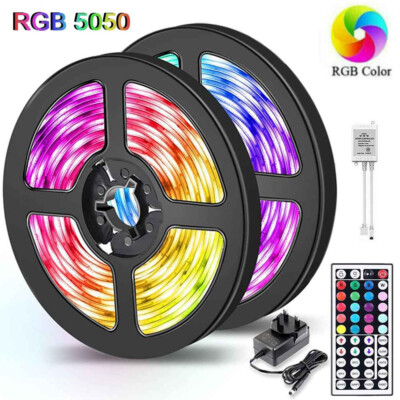
@Ian-Barber Could you let me know where you purchased the string lights that you have in your darkroom? I've heard of American folk using them but could never find a uk supplier of the LED lights that they used.
 
@Ian-Barber Could you let me know where you purchased the string lights that you have in your darkroom? I've heard of American folk using them but could never find a uk supplier of the LED lights that they used.

@Hendo'svan I bought them from eBay. I got the set with the Remote Control

 
Back
Top