Multiple - Fragmented Exposures

You’d expect a lighter object to behave that way. It’s only received a partial exposure. Let’s say a reading of the light object calls for placement on Zone 7 in a normal (ie: non-multiple) exposure. If you remove it after half a second, it will be recorded as Zone 6. That’s for only two exposures, but we seem to be discussing more exposures than that. If you remove the light object after a quarter of the total exposure, it will record as Zone 5 - a mid-tone grey.
And so on, down the Zones…
You might be able to adjust this by plus development. Alternatively, scanning and adjusting the file on-screen might give what you want.
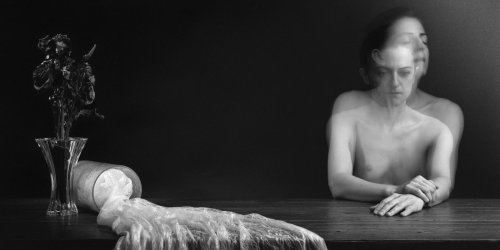
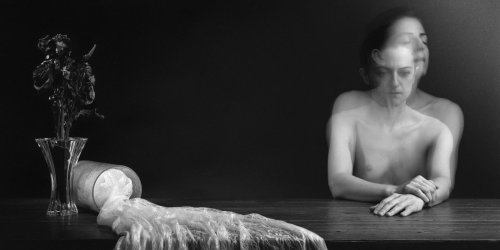
You may well want to produce a wet darkroom print. A Victorian photographer would have hand-painted a mask, so as to give ultimate control. This is how “Two Ways of Life” was produced.
A very labour-intensive alternative would be to use a very small torch and paint light onto the object in question until it recorded as you want to see it. A good deal of experiment might be needed.
 
It's hard to understand quite what you are saying,

Perhaps a better explanation of multiple exposures is needed. Let's start by watching a tree behave on a windy day, branches and leaves dance in the wind in different directions.

Now assume a 4 second camera exposure, with a single exposure all movement will be a blur, four separate 1 second exposures will still be a blur. So we need to break that 4 second exposure down much further, say 16 1/4 second fragments, or a mixture of 1/4 and 1/8 again adding to the whole 4 seconds adding more for reciprocity.

If you have a base exposure of 1 second, or shorter, you can use faster speeds to build up the fragments. Although I've used fragmented exposures a few times over the years, I've not really experimented. It has always just worked, only one shot.

Ian
Oh! I'm so sorry for not clearing it up.

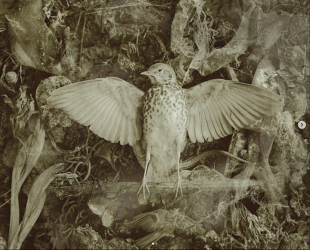
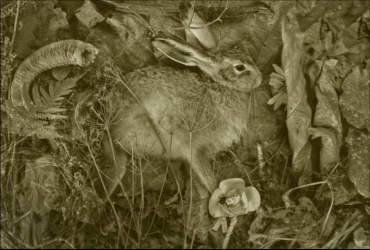
I'm currently working to recreate Blakemore's Chimerical Landscapes/ Fragments of a garden - It's more of an experiment really to see where I can take the technique of multiple exposures for a current project.

I've only been working with 5x4 for a few months now as I typically working with 35mm or medium format so learning the camera movements and how to manipulate the focus plane are things I've only read about rather than actually practiced.
 
Oh! I'm so sorry for not clearing it up.

I'm currently working to recreate Blakemore's Chimerical Landscapes/ Fragments of a garden - It's more of an experiment really to see where I can take the technique of multiple exposures for a current project.

I've only been working with 5x4 for a few months now as I typically working with 35mm or medium format so learning the camera movements and how to manipulate the focus plane are things I've only read about rather than actually practiced.

Makes sense now. I have a print from the Chimeral Landscapes series at the foot of my stairs, John sent it as a Christmas card in 1989,

My issue, for the past few days, is lighter objects in the still life have been greyed over after I've taken them out to make the subsequent exposures, so I'm looking for a way wherein some of the elements in the frame suffer the least amount of darkening.

If lighter objects are being removed, then they will need to be there for almost all the exposures. If you haven't seen actual prints from the Chimeral Landscape series, they are probably greyer and slightly lower contrast than reproductions in books.

Ian
 
Can I make a suggestion? Experiment with a digital camera to start with, to save wasting film. The principles are the same. My Nikon D850 can take multiple shots on the same frame and the has an overlay mode that can be Add, Average, Lighten or Darken. I would assume other cameras have similar. Here is an explanatory video…


Of course if you don't have similar functionality on a digital, you can always learn from how the different modes affect the image and transfer those skills to your LF camera.
 
Aha! We have been discussing two different uses of multiple exposures. One to dissect motion and the other to overlay images of static objects.
This is a very simplified comment.

It’s very brave to attack camera movements and multiple exposure at the same time. May I hint at doing only one?
 
Aha! We have been discussing two different uses of multiple exposures. One to dissect motion and the other to overlay images of static objects.
This is a very simplified comment.

It’s very brave to attack camera movements and multiple exposure at the same time. May I hint at doing only one?
Hmmm. But surely you can do multiple exposures whilst moving the camera
 
A roll film back would be ideal for doing test shots and gaining insight into what does and doesn't work. It's a lot more efficient and cost effective and the knowledge could then be directly applied to LF.
 
Camera motion? I don’t think that’s been mentioned so far, but it’s certainly another possibility.
 
Makes sense now. I have a print from the Chimeral Landscapes series at the foot of my stairs, John sent it as a Christmas card in 1989,


If lighter objects are being removed, then they will need to be there for almost all the exposures. If you haven't seen actual prints from the Chimeral Landscape series, they are probably greyer and slightly lower contrast than reproductions in books.

Ian
Unfortunately I've only ever seen those prints in book form, not the originals. Blakemore and my adopted grandfather, however, used to exchange postcards - we'd look at them, study them and my pop would bring out a signed copy of his books featuring his landscapes and tulips. I was still primarily a documentary photographer - Frank, Bresson, Winogrand, Koudelka, Meiselas and many others took up most of my psyche. So, now that I have had my courses start, I've had to slow down and move away from the swift environment of being a documentarist which lead me to working with 5x4. It is what I thought to be the best way to go about maintaining creative momentum.
 

Attachments

  • tempImageViMSp0.png
    tempImageViMSp0.png
    168.8 KB · Views: 11
  • tempImageItkYrc.png
    tempImageItkYrc.png
    200.8 KB · Views: 11
  • tempImageg6C7M6.png
    tempImageg6C7M6.png
    551 KB · Views: 10
A roll film back would be ideal for doing test shots and gaining insight into what does and doesn't work. It's a lot more efficient and cost effective and the knowledge could then be directly applied to LF.
I wonder if there is one for my Calumet CC400.
 
Can I make a suggestion? Experiment with a digital camera to start with, to save wasting film. The principles are the same. My Nikon D850 can take multiple shots on the same frame and the has an overlay mode that can be Add, Average, Lighten or Darken. I would assume other cameras have similar. Here is an explanatory video…


Of course if you don't have similar functionality on a digital, you can always learn from how the different modes affect the image and transfer those skills to your LF camera.

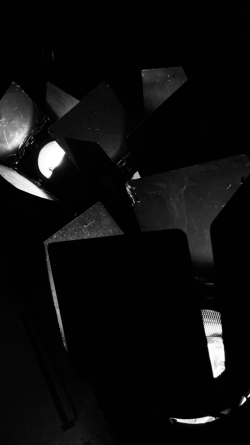
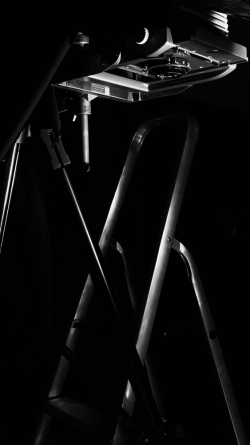
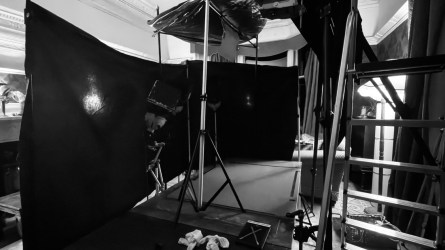
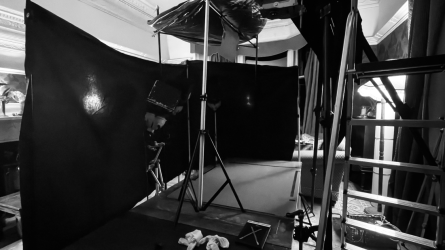
I've used my fuji before to make multiple exposures of basically the same thing, however the set has already been set up. Three redheads, one big table, foliage to be used and my 5x4's 8 or 9 feet up in the air. Haha!
 

Attachments

  • tempImagee7ep0Z.png
    tempImagee7ep0Z.png
    551 KB · Views: 3
Aha! We have been discussing two different uses of multiple exposures. One to dissect motion and the other to overlay images of static objects.
This is a very simplified comment.

It’s very brave to attack camera movements and multiple exposure at the same time. May I hint at doing only one?
Yes, yes it took me quite long to clear that up haha!

To reply to your hint: Not really possible to not make use of the movements. Since I don't have scaffolding, my camera is on the edge of a table and not central which means that the frame lines, if I had my front and rear standard at their zero positions (no rise nor tilt), would go over the bottom edge of the table showing the lovely carpet below. For this I've raised the front standard and gave it slight tilt to both front and rear for them to be parallel to each other as well as the table below, thus having an undistorted focus plane. Now it's a matter of adjusting my depth of field so that the closest and farthest objects to the lens are sharp.
 
I don’t think John used scaffolding. He worked in a fairly ordinary room And with a fairly simple camera, an MPP.
Why not put the subject on the floor?
 
I don’t think John used scaffolding. He worked in a fairly ordinary room And with a fairly simple camera, an MPP.
Why not put the subject on the floor?
I use garden tree bark for the textured background which has a little bit of dirt and soil in it so the carpet would get ruined. As per the scaffolding, that's something my mentor, Douglas Mcbride, worked with when doing his own still lifes which I've copied slightly by attaching tent sticks to the tops of lighting stands for my reflector to lie on. I was previously working with natural light coming through these big windows but light would shift throughout the day so I thought making a set wherein I have control over every single aspect when making a shot. Plus that gives me the opportunity to burn the midnight oil since I'm not at the mercy of waiting for the sun to rise.

Here are my mentor's works down below :)

If you'd like to view more of his works, he's on Instagram @Douglas.mcbride
 

Attachments

  • Screenshot 2025-10-24 at 15.22.25.png
    Screenshot 2025-10-24 at 15.22.25.png
    1.4 MB · Views: 10
  • Screenshot 2025-10-24 at 15.22.40.png
    Screenshot 2025-10-24 at 15.22.40.png
    1.1 MB · Views: 10
I've just checked and your model camera will only accept slide-in roll film backs and NOT graflok type backs and accessories.
The best option would be the newer Calumet C2N backs but the older Calumet C2 also works.
Cool! I'll check em out. Thank you very much, Marty
 
Unfortunately I've only ever seen those prints in book form, not the originals. Blakemore and my adopted grandfather, however, used to exchange postcards - we'd look at them, study them and my pop would bring out a signed copy of his books featuring his landscapes and tulips. I was still primarily a documentary photographer - Frank, Bresson, Winogrand, Koudelka, Meiselas and many others took up most of my psyche. So, now that I have had my courses start, I've had to slow down and move away from the swift environment of being a documentarist which lead me to working with 5x4. It is what I thought to be the best way to go about maintaining creative momentum.
A subject I can have imput in yes!! Lol

I shoot a lot of multiple exposure and long shutter pics. I do two types 1) layered multiple exposure up to 32 shots rotating around a subject
FP4@80  mamiya 7II 08 .jpeg

2) multiple exposures in a static position:
FP4@80  mamiya 7II 01(MORE EXPOSURE).jpegrz67 65mm HP5 02.jpeg

3) multiple exposures where I freeze one frame with flash and use bulb mode on shutter to create motion:

150mm hc110 EI100 1+31 f22 3's (6's rep)03 lighter.jpeg

I’ve found that dark areas on film are able to layer lighter subjects well. Lighter subjects just build up exposure and brightness. I would share more examples of subjects who are darker behind a lighter background but sadly my Mac died with many work also.

I use this method to do layered multiple exposures:
IMG_7585 copy.jpeg

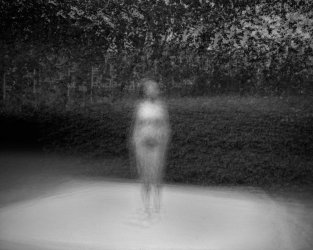
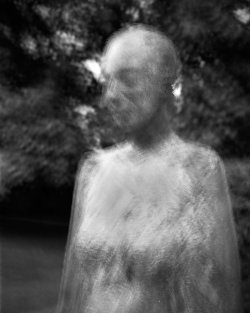
From reading your post where you removed a white subject from scene, the more layered exposures you add the fainter the white subject will become, giving it a ghostly feel/mood

I’ve many book references if you are interested
 

Attachments

  • 150mm hc110 EI100 1+31 f22 3's (6's rep)03 lighter.jpeg
    150mm hc110 EI100 1+31 f22 3's (6's rep)03 lighter.jpeg
    70.6 KB · Views: 8
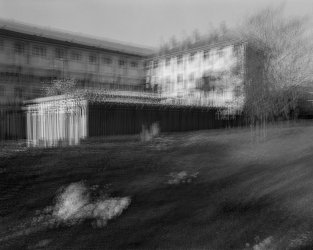
This is a technique for portraying movement useful with trees, water, clouds etc, instead of a blur you get small incemental steps.

View attachment 5728

Essentially you need a filter to increase the exposure times this could be a Neutral Density filter, a Polariser, or any deep filter that increases the Exposure factor. I tend to use a Green filter as it also separates the greens when there's foliage/leaves etc.

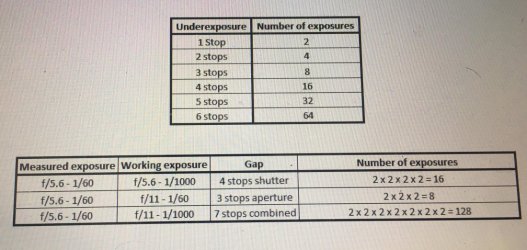
The idea is to use a series of shorter exposures to build up to the desired exposure the only problem is the exposures are prone to reciprocity failure so the sum needs to be greater than the whole, I usually aim for about half a stop but the more individual exposures the greater the increase needed. This is similar to using multiple flash exposures.

So an example might be a 1 second exposure at f22 is needed, we could break that down into six at 1/8 and 3 at 1/4 that's a total of 1.5 seconds. You need a good rigid tripod and camera particularly if you're changing shutter speeds, and careful re-cocking of the shutter. A Prontor or similar press shutter would be ideal but I've had no issues with my Wista 45DX and Copal shuttered lenses. You can uses so many different combinations of speeds and numbers of exposure it's a technique with numerous possibilities. It's not one I use a lot but when I have it's always succeeded.

View attachment 5729

You can use a similar technique for still lives adding or subtracting components between the exposures, John Blakemore did this in his Chimerical Landscapes around 1990 published in Inscape, I'm lucky enough to have a print from this series.

Ian

Oh Ian you may have sparked an idea this work and technique!! It’s very interesting.
 
A subject I can have imput in yes!! Lol

I shoot a lot of multiple exposure and long shutter pics. I do two types 1) layered multiple exposure up to 32 shots rotating around a subject
View attachment 5740

2) multiple exposures in a static position:
View attachment 5741View attachment 5742

3) multiple exposures where I freeze one frame with flash and use bulb mode on shutter to create motion:

View attachment 5745

I’ve found that dark areas on film are able to layer lighter subjects well. Lighter subjects just build up exposure and brightness. I would share more examples of subjects who are darker behind a lighter background but sadly my Mac died with many work also.

I use this method to do layered multiple exposures:
View attachment 5746

From reading your post where you removed a white subject from scene, the more layered exposures you add the fainter the white subject will become, giving it a ghostly feel/mood

I’ve many book references if you are interested
Oh so you go down in exposure, not up.
 
Back
Top