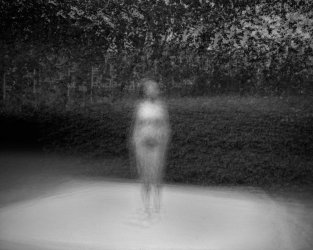
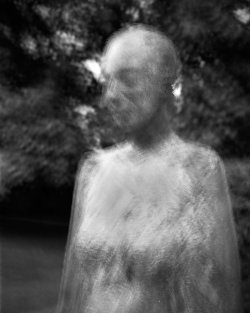
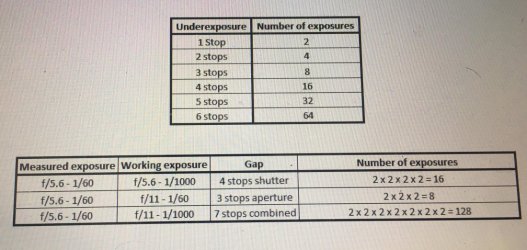
You’d expect a lighter object to behave that way. It’s only received a partial exposure. Let’s say a reading of the light object calls for placement on Zone 7 in a normal (ie: non-multiple) exposure. If you remove it after half a second, it will be recorded as Zone 6. That’s for only two exposures, but we seem to be discussing more exposures than that. If you remove the light object after a quarter of the total exposure, it will record as Zone 5 - a mid-tone grey.
And so on, down the Zones…
You might be able to adjust this by plus development. Alternatively, scanning and adjusting the file on-screen might give what you want.
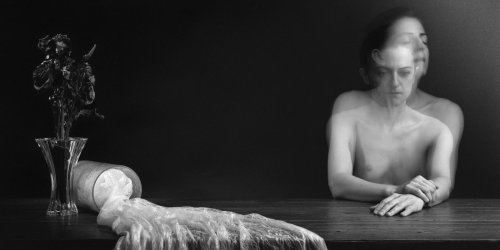
You may well want to produce a wet darkroom print. A Victorian photographer would have hand-painted a mask, so as to give ultimate control. This is how “Two Ways of Life” was produced.
A very labour-intensive alternative would be to use a very small torch and paint light onto the object in question until it recorded as you want to see it. A good deal of experiment might be needed.
And so on, down the Zones…
You might be able to adjust this by plus development. Alternatively, scanning and adjusting the file on-screen might give what you want.
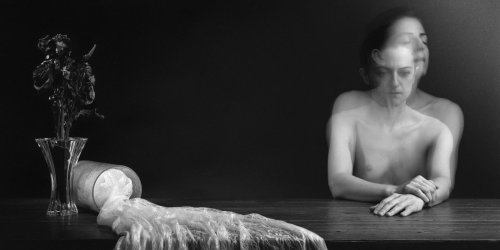
You may well want to produce a wet darkroom print. A Victorian photographer would have hand-painted a mask, so as to give ultimate control. This is how “Two Ways of Life” was produced.
A very labour-intensive alternative would be to use a very small torch and paint light onto the object in question until it recorded as you want to see it. A good deal of experiment might be needed.